

• Flip Book • eNews • eAdventures • eCities • eCargoIntl • eBikeTypes • eRoad • eGravel • eMTB • eUrban • eCargo • eBikeTests • eAccessories • eBikeShops • eFeatures •
• Flip Book • eNews • eAdventures • eCities • eCargoIntl • eBikeTypes • eRoad • eGravel • eMTB • eUrban • eCargo • eBikeTests • eAccessories • eBikeShops • eFeatures •
May 2, 2026 - Budapest is a very progressive cycling city with an active transportation program managed by the Centre for Budapest Transport (BKK).
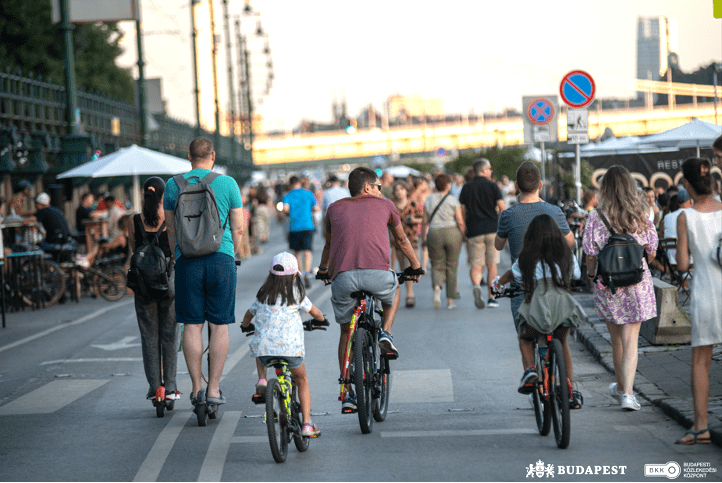
Boasting 215km of cycle tracks, which are fully separated from motorized traffic, along with 85km of bicycle lanes, of which 5km are protected bike lanes, in total 55.8km of main network elements were built between 2020 and 2024.
In addition, the city has implemented traffic-calming zones, which further support people travelling by bicycle.
According to the latest data, between 2021 and 2024 the modal split in Budapest saw walking increase from 16% to 19%, while cycling rose from 2% to 5%. The goal is for walking to reach 20%, cycling to increase to 10%, and for public transport to hit 50%.
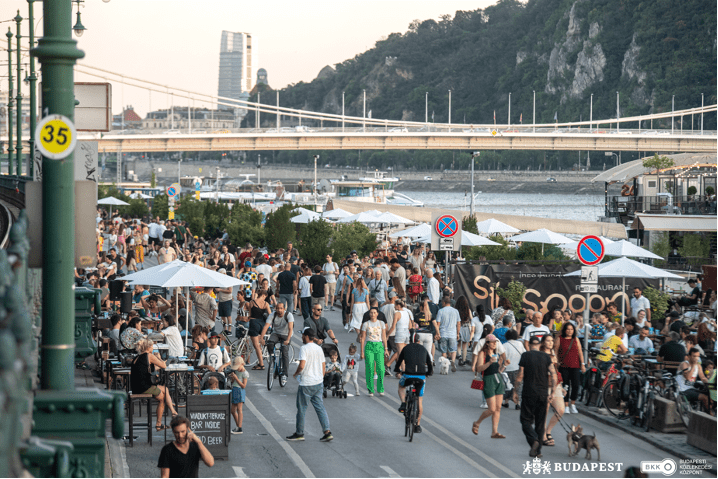
For the fifth consecutive year, a riverside community space is being created on the Pest (eastern bank of the Danube) side of the city by opening the lower embankment of the Danube River exclusively to cyclists and pedestrians. This results in a car-free route of more than 2.5km every weekend.
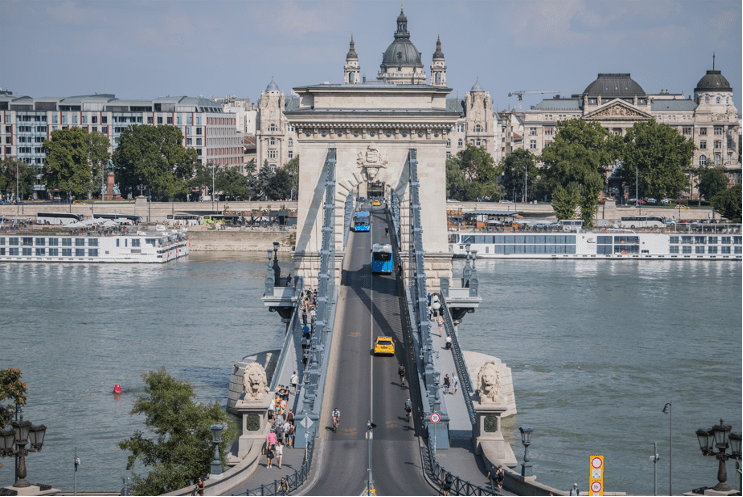
In 2023, the full reconstruction of the Chain Bridge, the first permanent river crossing between Buda and Pest, was completed. Since the renovation, it can only be crossed by sustainable modes of transport, such as walking, cycling, public transport, motorcycles and taxis, resulting in the disappearance of congestion on the bridge.
The newly launched Healthy Streets initiative will also support cycling at 20 locations across the city to promote cleaner air, pedestrian- and cyclist-friendly public spaces, and livable urban areas; projects to be completed by 2029.
Budapest’s public bike share system, called Bubi, plans to include 1,000 e-bikes out of a total of 5,000 rentable bikes in 2026. In addition, the Budapest Municipality and BKK have acquired two electric cargo bicycles for internal logistics purposes and to raise awareness.
A total of 80 closed bike shelters were recently built via a European Union–funded project, and there are plans to fund and implement 210 access-controlled parking spaces, along with approximately 50 additional closed bicycle parking spaces.
There are also various events and awareness campaigns such as the “I Bike Budapest” annual bicycle parade organized by the Hungarian Cyclists’ Club, the Bicycle Breakfast, a nationwide event hosted twice a year for people going to work or school by bike, the European Mobility Week and Car Free Weekend and finally School Streets, a new initiative that aims to ensure that children can arrive at schools in a calmer, safer and healthier environment.