

• Flip Book • eNews • eAdventures • eCities • eCargoIntl • eBikeTypes • eRoad • eGravel • eMTB • eUrban • eCargo • eBikeTests • eAccessories • eBikeShops • eFeatures •

• Flip Book • eNews • eAdventures • eCities • eCargoIntl • eBikeTypes • eRoad • eGravel • eMTB • eUrban • eCargo • eBikeTests • eAccessories • eBikeShops • eFeatures •
May 3, 2026 - In late January, cyclists in Toronto were back in the Court of Appeal for Ontario to defend their previous successful challenge in the Superior Court versus the province’s attempt to rip up three stretches of the city’s bike lanes.
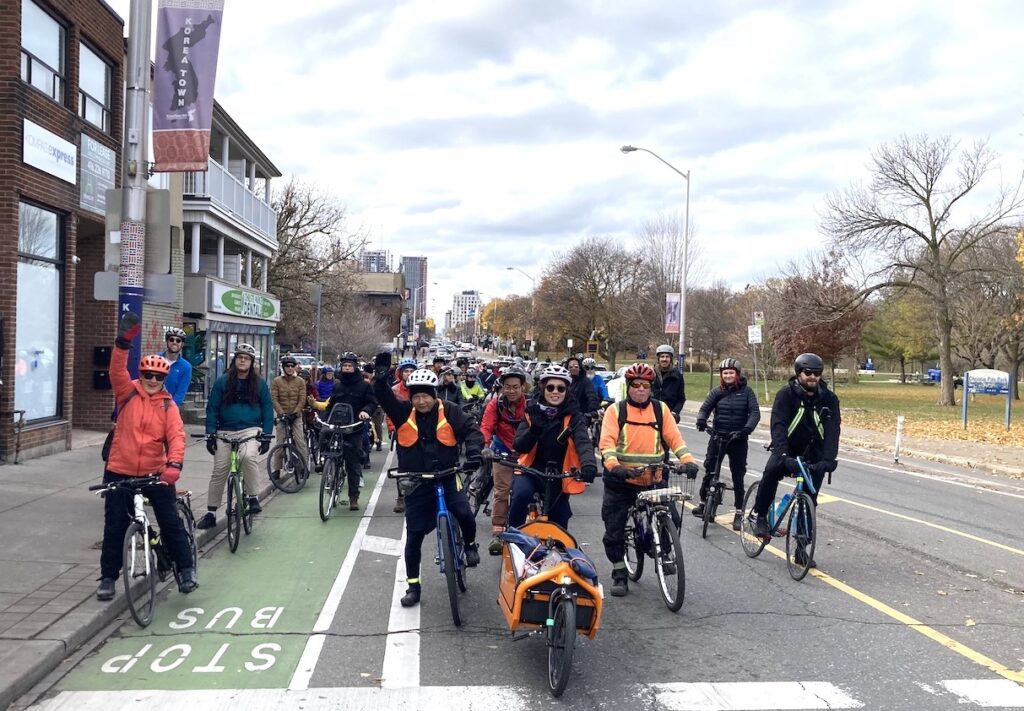
Premier Doug Ford’s government passed Bill 212 into law in 2024, aiming to remove 19 kilometres of protected bike lanes in Toronto along Bloor Street, Yonge Street and University Avenue, claiming their removal would reduce traffic congestion.
Led by Cycle Toronto, cyclists argued that dismantling protected lanes would breach section 7 of their Charter rights to life, liberty and security, and in July 2025, Superior Court Justice Paul Schabas sided with the cyclists and their pro bono legal team, Eco Justice and Paliare Roland.
Schabas also noted that the government proceeded despite its own advisers and external experts broadly agreeing that it would not accomplish its stated goal of reducing traffic congestion — and could possibly make it worse.
The judge found that even if the province’s claim was taken at face value, the harm caused to cyclists would be way out of step with the law’s intent to save some drivers “a few minutes of travel time.” The province also argued that a decision in favour of the cyclists would effectively create a right to bike lanes, but this was also dismissed by Schabas.
While the case was being decided the government attempted to amend the law, changing the language
from “removal” to “reconfiguration,” but Schabas found that it was an attempt to evade his ruling. Schabas noted that removing the bike lanes, or reconfiguring them so they’re no longer separated, would lead to more accidents, injuries and death. His ruling also noted that the government recognized as much when it added an immunity clause to the legislation, shielding it from liability.
In Nov. 2025 the Ford government upped the ante by passing Bill 60, which effectively banned any new bike lanes that remove a car lane in the province, among other unpopular measures that affect tenants.
As part of its appeal on January 28, the province argued that improving travel time by reducing congestion was not its sole goal, but rather to also allow more cars on the road for people who want to drive. Cycle Toronto had argued that more car lanes result in “induced demand,” leading to more congestion.
The province’s legal team claimed that Schabas erred in finding that bike lane removals would violate the right to life, liberty and security of a person, as that section of the Charter “was never intended to subject legislation that has any impact on safety to judicial scrutiny.” But the other side argued that the safety issues for cyclists is compelling when government decisions are not made in accordance with the “principles of fundamental justice.”
According to a 2024 Toronto city staff report, research suggests that the risk of cyclist injury on a major street with parked cars and no cycling infrastructure is about nine times greater than on a protected bike lane.
At a presentation by War on Cars at the Hot Docs Ted Rogers Cinema on Bloor St W. in Toronto, Andrew Lewis (Paliare Roland) noted that, “The law won’t resolve the situation, and there is also the consideration of how their ruling might affect future cases. Even if we win, the government can look into other ways to achieve their agenda. The best solution is for the people to keep advocating and to vote in new leadership.”
A decision on the appeal, to be made by a panel of three judges, will come at a later date.