










September 29, 2026 - (Toronto, ON) A coalition of Ontario healthcare workers held a press conference in downtown Toronto today, to denounce Ontario’s plans to remove bike lanes on three major roadways across the city and enforce its controversial Bill 60.
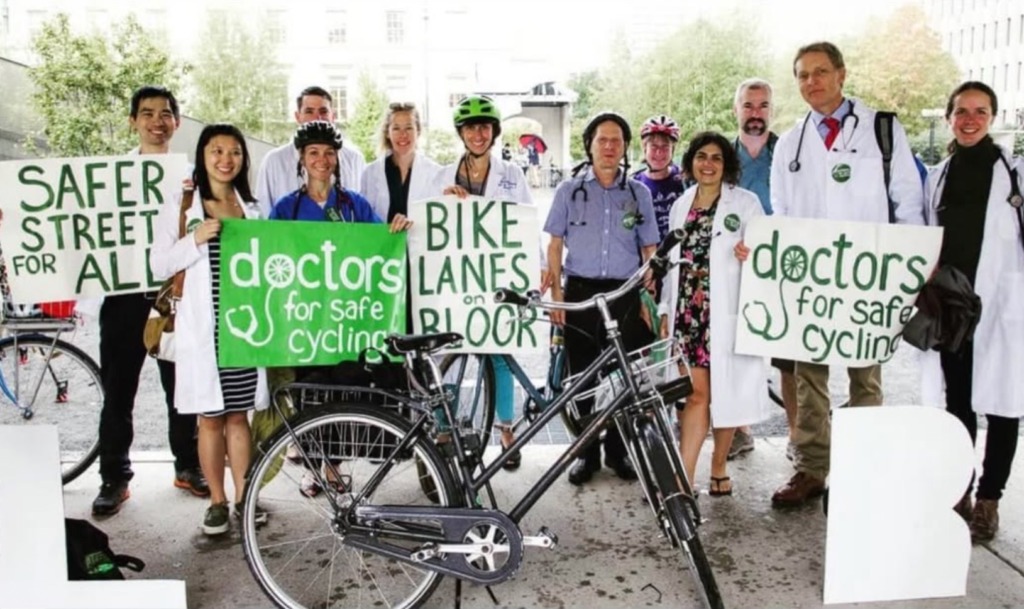
Healthcare workers across Ontario are fighting for safer roads and explained the risks associated with a lack of proper road infrastructure for cyclists, pedestrians and drivers. They see the devastating consequences of traffic injuries and are unwilling to stand by silently – almost 650 have signed an open letter demanding the province back down on their plans.
They say that the province is once again overstepping, and wasting at least $48 million of public funds to remove life-saving infrastructure.
Toronto family physician Samantha Green, who is also the co-founder of the provincial advocacy coalition Doctors for Safe Cycling, told CBC Toronto it’s clear that the decision to remove bike lanes is “not based on evidence.”
“Bike lanes save lives,” said Green. “It’s clear that the public, that the community here in Toronto wants to keep the bike lanes.”
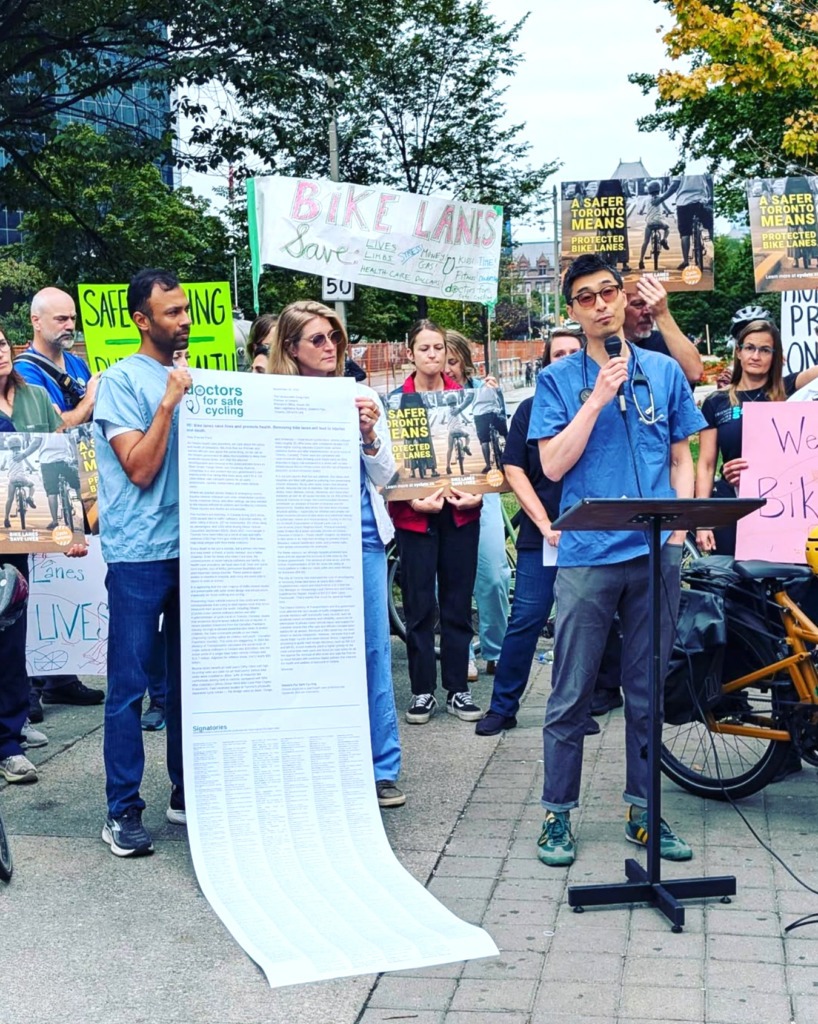
Frontline healthcare workers see the horrifying aftermath of traffic injuries: major injuries, permanent disabilities, PTSD, and the ripple effects of trauma on families and caregivers. Bike lanes are proven to prevent these tragedies, and obstructing cities from installing and maintaining this life-saving infrastructure threatens public health. They claim that protecting public safety means listening to healthcare workers.
The law empowering the province to remove bike lanes along Bloor Street, Yonge Street and University Avenue, Bill 212, was initially passed at Queen’s Park in 2024. But Cycle Toronto and others launched a legal challenge against the bill and won in July 2025.
Internal documents from the transportation ministry that were made public as part of Cycle Toronto’s court challenge to Bill 212 showed that the province’s own commissioned work: a safety analysis prepared for the Ministry of Transportation by engineering firm CIMA+, estimated that removing the bike lanes could increase collisions for all road users, cyclists, pedestrians, and drivers alike, by as much as 54%, and found no clear evidence that removal would ease congestion.
The province appealed and in Nov. 2025 passed Bill 60 giving them even more power and control over bike lanes, effectively banning them across the province if they remove a lane of vehicle traffic. In Aug, 2026, the Court of Appeal of Ontario ruled in the province’s favour.
In a statement to CBC Toronto, a spokesperson for Ontario’s Ministry of Transportation said the government received a “clear mandate” from Ontarians to address gridlock. “That’s why we’re restoring vehicle lanes on Toronto’s busiest streets to reduce traffic and get people and goods moving again,” said Dakota Brasier, Director of Media Relations to the Minister of Transportation, adding that congestion costs the province’s economy more than $56 billion each year.
Healthcare workers in Ontario don’t agree – read more here and on CBC here.