


• Flip Book• eNews • eBikes • eAccessories • eCities • eSystems • eAdventures • eBikeTests •

• Flip Book• eNews • eBikes • eAccessories • eCities • eSystems • eAdventures • eBikeTests •
October 18, 2026 - Philadelphia, the sixth-largest city in the U.S.A., has continued to make steady gains since the Philadelphia Pedestrian & Bicycle Plan was adopted by the Philadelphia City Planning Commission (PCPC) in April 2012.
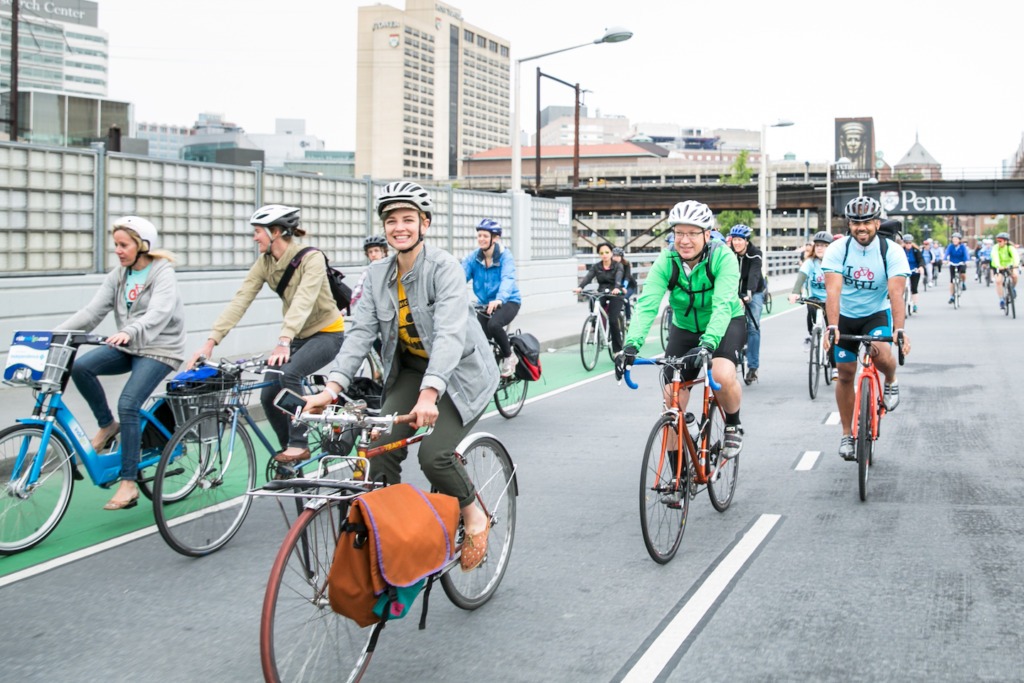
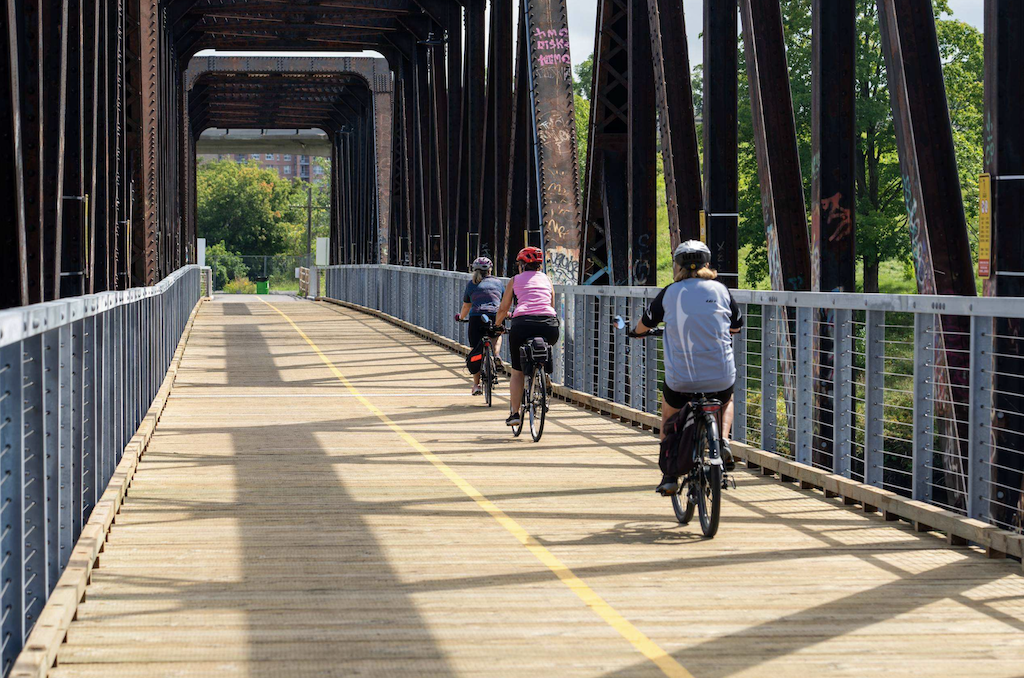
Philly has seen a massive increase in cycling since the pandemic hit, with growth ranging from 75% to 471%. Since 2010, bicycle use has risen from 1.6% to 2.1%, and the current modal share for cycling is 2.6%, with a goal of 6.5%.
The current cycling network consists of 37.0 miles of separated lanes, 246.6 miles of painted conventional lanes, 55.7 miles of on-street shared facilities (e.g., bus/bike lanes or sharrows), and 83.9 miles of multi-use trails.
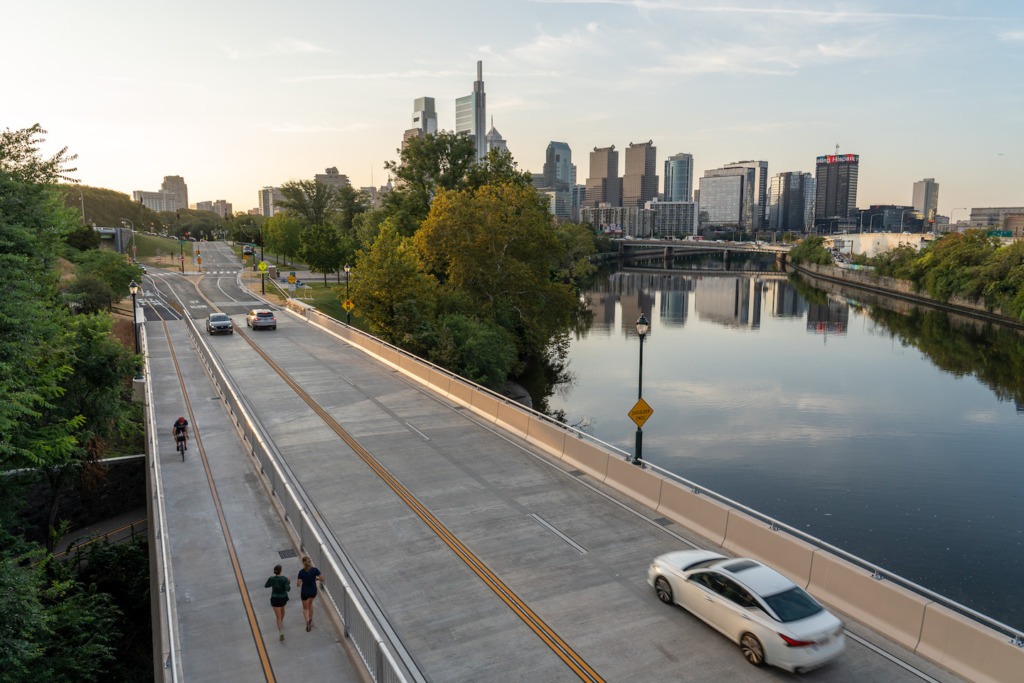
From 2018 to 2021, City Council enabled 18 bicycle and pedestrian safety projects, yielding 18.6 miles of new bike facilities. Since then, Council has passed an additional 21 projects, adding 40 miles of new bike facilities like the MLK Drive Bridge with shared-use path.
The Bicycle Coalition of Greater Philadelphia, founded in 1972, has been a driving force behind much of Philly’s cycling success. The coalition helped secure a $7 million cash infusion for Circuit Trails, a vast regional network of multi-use trails in Greater Philadelphia that aims to reach more than 800 miles of interconnected trails across a nine-county region spanning Pennsylvania and New Jersey by 2040.
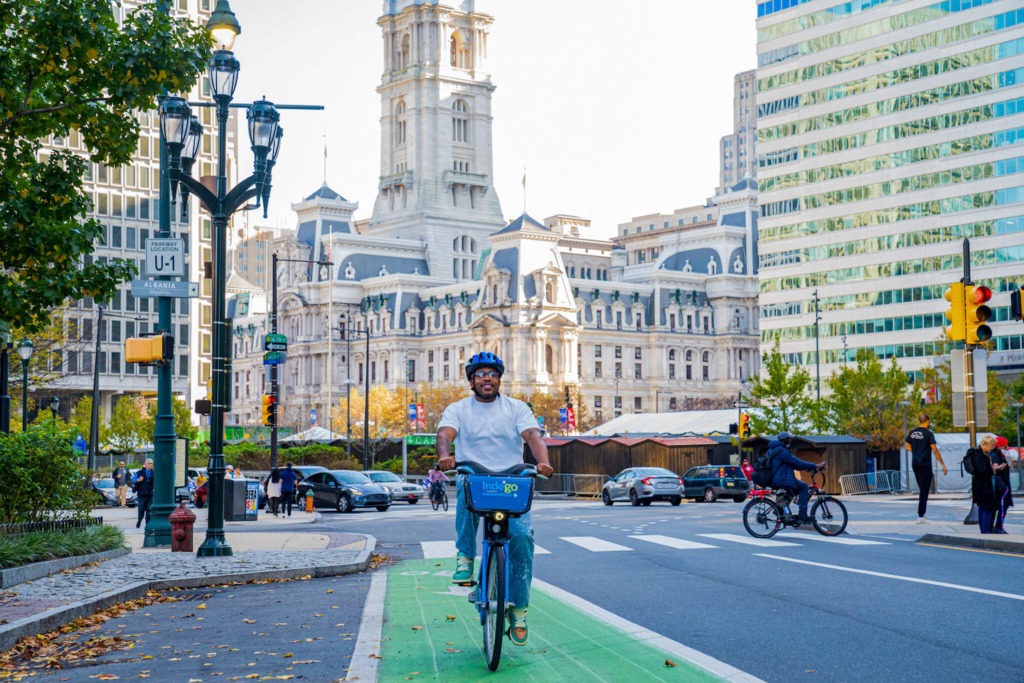
Indego, Philadelphia’s bike-share program, operated by Bicycle Transit Systems, is another success story. With over 2,000 shared bikes across 250 stations, including about 50% e-bikes, 2025 was record-breaking, with 1.3 million trips. 2026 looks set to shatter that record.
Safety is another key element of the city’s strategy, with a for- mal commitment to a Vision Zero policy to eliminate traffic deaths by 2030. In 2016, the city created a new Office of Complete Streets to re-engineer streets to meet Vision Zero’s standards.
In early Dec. 2025, Mayor Cherelle L. Parker signed a new law making it illegal to stop in bike lanes in Philadelphia. Parking in bike lanes is already forbidden, but the new ordinance also makes it illegal to stop temporarily in a bike lane to load or unload.
Bicycle parking is also required for developments across the city. In addition, bike parking is available at SEPTA stations, with approximately 1,000 bike racks across 282 stations.
CONNECT is the City of Philadelphia’s Strategic Transportation Plan, which aims to increase the percentage of residents living within 1/4 mile of a protected bike lane or trail from 16% to 28%, double the percentage of commuters who travel by bike, and increase the total percentage of commuters who either walk, bike, or use transit by five percentage points, from 36% to 41%.