


• Flip Book• eNews • eBikes • eAccessories • eCities • eSystems • eAdventures • eBikeTests •

• Flip Book• eNews • eBikes • eAccessories • eCities • eSystems • eAdventures • eBikeTests •
October 18, 2026 - The Ontario Bike Summit (OBS), Canada’s premier cycling and active transportation conference, hosted by the Share the Road Cycling Coalition (STR), convened in Toronto from Sept. 22-24 at the Novotel Toronto Centre, alongside the Ontario Traffic Council’s (OTC) Active Transportation Symposium on Sept. 21.

The joint gathering signalled a unified push across the province’s municipalities to design complete, safe, and multimodal streets, increase cycling infrastructure, reduce traffic gridlock, and expand active transportation networks.
Under the theme “Inspiring the Future: Building Liveable Cities Through Cycling”, the summit brought together urban planners, municipal leaders, equipment operators, and advocacy professionals to navigate a shifting provincial policy landscape.
Over three days of mobile workshops, panels, and keynotes, the discussions focused heavily on operational innovation, micro-mobility scalability, large-scale infrastructure integration, data-driven decision-making, and relatable public messaging.

Toronto’s Mayor, Olivia Chow, delivered a special guest welcome to the Summit, highlighting the importance of cycling infrastructure and bike lanes for everyone’s safety, including kids biking to school.
She also discussed the repair of 213,000 potholes on Toronto streets, the benefits of year-round cycling, and Bike Share Toronto’s record- breaking accomplishments, including new docking stations on the Toronto Islands, which show strong demand for cycling across the city and, therefore, the importance of making it safe for all users.

Key Takeaways for Cycling & Transportation
1. Mega-Developments & Multimodal Master Planning The conference kicked off with a look at North America’s largest urban redevelopment project: Northcrest Developments’ $30 billion, master-planned transformation of Toronto’s former Downsview Airport (YZD). The project will deliver 35,000 homes across seven new neighbourhoods, anchored by a two-kilometre pedestrian park. For active transit planners, YZD serves as a benchmark for integrating complete active networks into the community.
2. Scaled Micro-Mobility & “First-and-Last-Mile” Integration to Support Equitable Connections
Micro-mobility operators and urban experts highlighted that fleet options, from e-scooters to heavy-duty cargo e-bikes, are maturing from trial to essential transit infrastructure.
Commercial Dynamics: Mathew Varsava of Bike Share Toronto, the third-largest bike share system in North America, emphasized that system success hinges on operational consistency and on treating stations as active “mobility hubs” that provide seamless connections to EV charging, car sharing, and public transit. He noted that bike share operators must focus on seamless transit integration rather than isolated profitability metrics.
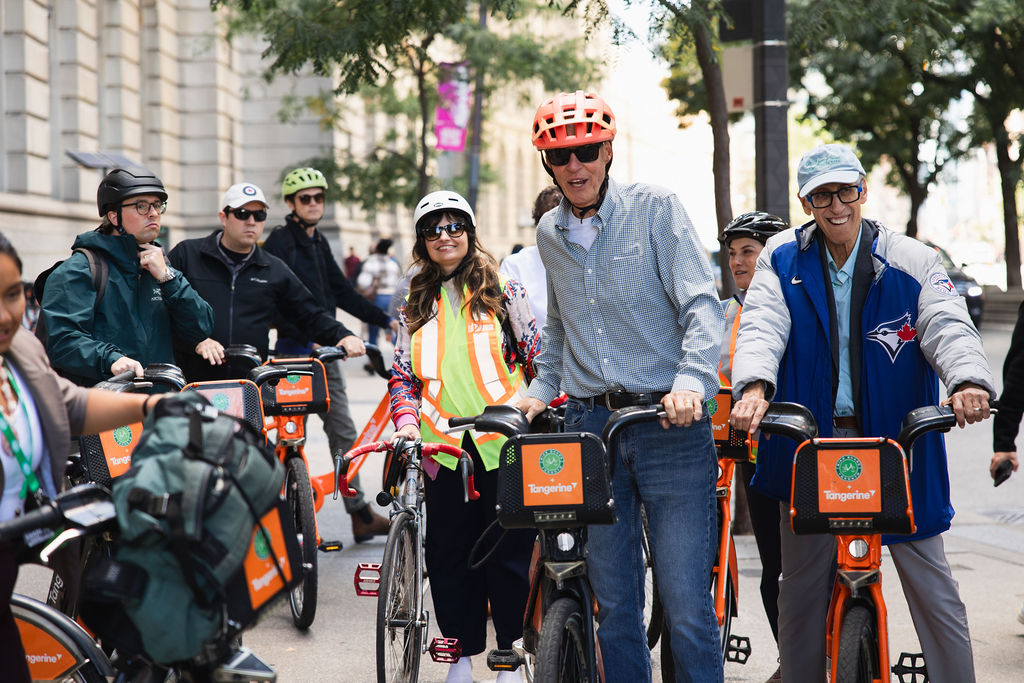
The Utility of Micro-mobility Vehicles: In smaller urban centres like Ajax, municipal pilot data show that e-scooters and e-bikes serve critical late-night shifts and “last-mile” connections. They provide accessible and affordable options for riders with a range of commuting, attire, and accessibility needs, which translates into fewer vehicle kilometres travelled (VKT).
3. Vision Zero Execution & Rapid Countermeasures
Keynote speaker Barkha Patel, former Director of Infrastructure for Jersey City, outlined the operational playbook that helped her city achieve zero traffic fatalities in 2022. The strategy relied on bold political commitment, multidisciplinary collaboration, and a resolve to prioritize vulnerable road users. Rather than waiting for multi-year capital megaprojects, municipal leaders approved high- impact tactical solutions, including quick-build, rapid- deployment safety countermeasures such as protected bike lanes, speed bumps, curb extensions, and pedestrian- priority signals, to improve safety and secure community buy-in.

4. Interprovincial Cycling Tourism as Economic Driver
A dedicated industry panel, backed by Destination Canada, explored the economic potential of developing the Cycle Ontario–Québec Tourism Corridor.
Economic Footprint: Cyclists are high-value visitors who stay longer and spend more locally than traditional tourists. Expanding regional trail connectivity, rural wayfinding, and e-bike charging stations opens revenue streams for small- town and agri-tourism businesses.
The Policy Gap: Panellists noted that Québec’s Route Verte framework (managed by Vélo Québec) offers a streamlined, province-wide network, whereas Ontario lacks a unified operational framework. Industry stakeholders urged provincial authorities to invest in sustained, connected corridors to meet growing cross-border cycle-tourism demand.
5. Cross-Partisan Collaboration & Polling Insights
Addressing public polarization over road space allocation, with an emphasis on bike lanes, was a major focus. David Coletto (CEO, Abacus Data) shared fresh provincial polling showing that while a vast majority of residents support safe road infrastructure, misinformation and safety fears keep ridership below potential. Nearly two-thirds of Ontarians (64%) believe municipalities, not the provincial government, should decide where local bike lanes are located. A substantial 30% of Ontarians surveyed reported cycling less because of fear of traffic, a key factor to address to build confidence and grow cycling.

Panellists, including members of Ontario’s All-Party Cycling Caucus, called for a shift in communication strategies and for collaboration across party lines:
Reframing the Narrative: Move away from “culture war” rhetoric and position active transportation as a practical economic tool for affordability that also reduces hospital costs, eases gridlock, and accommodates non-standard commute patterns.
Economic Levers: Panellists cited congestion pricing models (referencing London and NYC) and integrated parking management as essential systemic tools for efficiently managing urban space and generating local economic vibrancy.
6. Critical Industry Alert: Battery Safety & Public Education
Addressing an urgent operational issue affecting e-bike fleets, retailers, and users, Deputy Fire Marshal John McBeth provided a briefing on lithium-ion battery safety. Because thermal runaway can trigger a sudden, zero-warning fire with toxic emissions, the Office of the Fire Marshal launched the ChargedforLife.ca public campaign. Key compliance and safety standards for the industry and users include:
Sourcing: Mandatory procurement from certified, reputable manufacturers to eliminate grey-market cell risks. Charging Logistics: Batteries should never be left unattended to charge overnight, especially along emergency exit routes.
Disposal Protocols: Classifying used lithium-ion cells as hazardous waste rather than general municipal refuse.

7. Youth Education & International Partnerships
To establish long-term active transit habits, Share the Road Chair Eleanor McMahon announced a formal partnership with the UK’s Bikeability program, a $25,000 donation from Peter Gilgan, and 60 bicycles from the OPP Youth Foundation to support the new initiative. The program brings standardized cycling education directly into Ontario’s school curricula, training young riders in road safety, spatial awareness, and interaction with vehicles to foster a safer environment for future road users.
The Ontario Bike Summit also honoured 19 recipients of the Bicycle Friendly Communities (BFC) Awards. The BFC provides a shared framework for exchanging best practices and benchmarking progress; more than an award, it’s a roadmap for communities that guides local governments, advocates, and residents to work together, prioritize cycling investments, and build vibrant, inclusive, bike-friendly communities.

Looking Ahead
As Ontario’s municipal populations grow, planners, elected officials, and active transit professionals agree that expanding cycling networks and integrating them with public transit is essential to building sustainable urban capacity, improving public health, and strengthening local economic resilience.
Bridging the gap between isolated pilot projects and fully connected, integrated, and permanent infrastructure requires updating Ontario’s provincial cycling strategy (last revised in 2013) and providing municipalities with predictable capital funding and clear policy autonomy to implement their transportation plans.