



March 6, 2026 - Hans “No Way” Rey is a professional mountain bike trials rider and a pioneer of the sport since he began riding in the late 1970s. A multi-time Trials World Champion he has been a key figure in the development of mountain bike trials and freeriding, riding exclusively on GT bikes in a partnership that lasted 38 years.
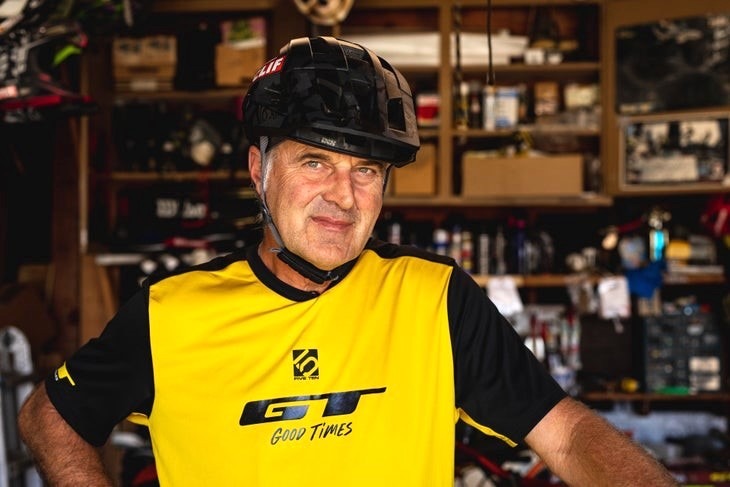
Inducted into the Mountain Bike Hall of Fame in 1999, “No Way” Rey has been demonstrating his talents in over 60 countries. The founder of Wheels 4 Life charity in 2005, the organization provides bicycles to people in need in developing countries around the world. Sponsored by Bosch eBike Systems this open letter reflects his own views.
An Open Letter to the Bicycle Industry
To the leaders, builders, advocates, and riders who shape our industry,
I’m writing because I care deeply about where bicycles—and electric bicycles—are headed. We are at a crossroads. The decisions we make about language, power limits, and definitions will determine whether Class 1 e-bikes remain accepted as bicycles—or get grouped with much more powerful machines that don’t belong in the same category.
It’s time to define our language, and it’s time to draw a line in the sand of when e-bikes become too powerful
Words Matter
Today, the term “e-bike” is used to describe everything from a lightweight pedal-assist mountain bike to electric mopeds and full-blown electric motorcycles. That lack of precision creates confusion—and conflict—with land managers, other trail users, parents, and lawmakers.
If we don’t define our terms, others will define them for us.
Ideally, “e-bike” would mean one thing:
A Class 1 pedal-assist bicycle with a maximum assist speed of 20 mph, no throttle, and a motor not exceeding 750 watts of peak power.
Instead, the label has expanded to cover vehicles with throttles, higher speeds, and significantly more power. That blurring of categories puts access at risk.
Clear Categories, Clear Expectations
We need distinct names for distinct machines:
• E-bicycle (EMTB): Class 1 pedal-assist only (20 mph max assist, 750W max peak power)
• E-moped: Throttle-equipped or faster than 20 mph or exceeding 750W, incl. Class 2&3
• E-motorcycle: High-power electric motorcycles well beyond bicycle-level performance
Clear labelling should be mandatory. Every electric vehicle should visibly state its category, assist speed, and peak motor power. This isn’t about enforcement—it’s about clarity and accountability.
The 750-Watt Line Matters
The 750-watt peak limit is not arbitrary. It helps determine whether a vehicle is treated as a bicycle or a motorcycle—and whether it remains welcome on trails and bike paths.
Maximum peak power and nominal (or average/rated) peak power are not the same.
A bike limited to 750 watts peak never exceeds that output. A motor rated at 750 watts nominal can produce much higher bursts of power. That difference is significant.
Class 1 e-bikes gained acceptance because they behave like bicycles: pedal-assist only, no throttle, limited speed, and moderate power. If we allow power creep—higher torque, faster acceleration, motorcycle-like performance—we shouldn’t be surprised when access disappears, and regulations increase.
We are already seeing warning signs. In New Jersey, proposed legislation would require insurance, registration, and motorcycle helmets, and would restrict trail access for electric bikes.
In California, lawmakers are working to reinforce the 750W peak limit to improve safety and preserve trail legality. These debates are not theoretical—they are happening now.
A Call to Responsibility
To manufacturers: Resist the temptation to chase bigger numbers at the expense of long-term access. Short-term sales gains could lead to long-term collapse.
To media and marketers: Use precise language—even when it’s less convenient. Help draw and defend the line that protects this category.
To riders: Ride responsibly. Understand what’s at stake. Don’t take trail access for granted.
To advocates and trade groups: Defend Class 1 clearly and consistently. The industry must self-regulate until the laws are defined.
In order to protect what we have, we must stop asking how much power we can get away with—and start asking how much power is too much.
— Hans Rey