




February 6, 2026 - (Toronto, ON) A packed and lively full house was on hand for The War on Cars podcast special evening event on Feb. 5 at the Hot Docs Ted Rogers Cinema on Bloor St W. in Toronto.

The popular, New York City–based podcast launched in 2018 examines how decades of car-first planning have reshaped our cities, our politics, and our daily lives. Podcast hosts, Sarah Goodyear and Doug Gordon, began by sharing some interesting facts about The War on Cars, and how the provocative name came to be chosen.
The duo recognized that it would likely turn off some people, but the benefits of a bit of “shock treatment”, and standing out in the crowd, has opened doors and paid dividends. “Apparently 93% of podcasts only manage a handful of events but The War on Cars has delivered well over 150 episodes,” quipped Goodyear. Their episodes average around 30,000 people, and more, that tune in.
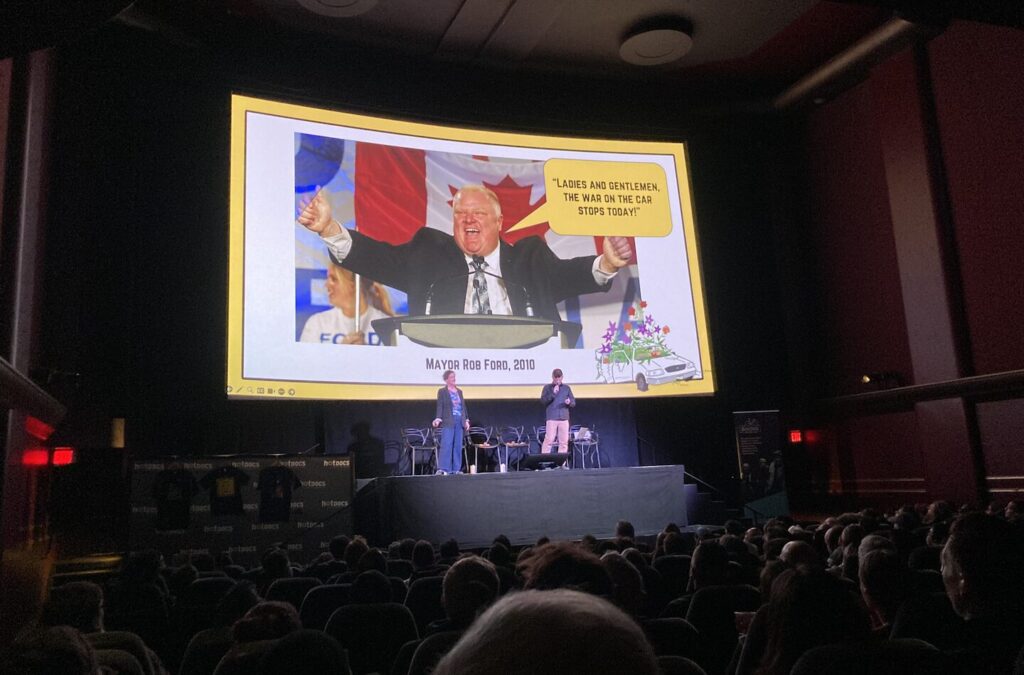
The name’s connection to Toronto comes from Rob Ford, who was running for mayor back in 2010 and promised to end what he termed was the city’s “war on cars”. His campaign, which resonated with suburban voters, led him to victory.
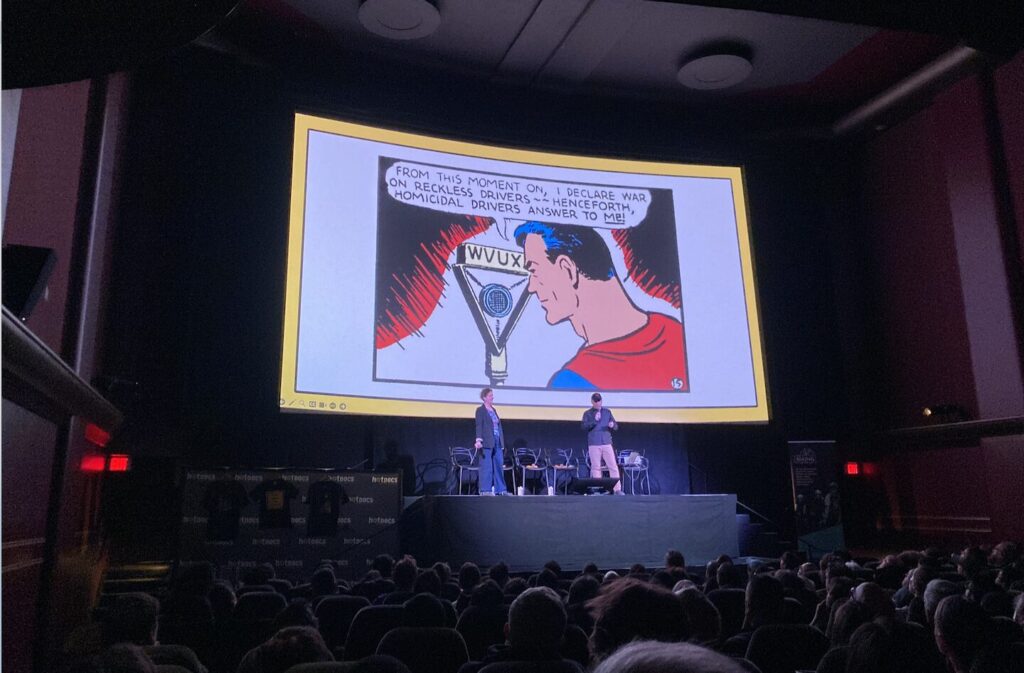
They also noted that conflicts with cars in U.S. cities date back to 1939 when many people including kids were being killed by cars, totalling 32,386 people annually. Action Comics took “action” and published editions about Superman taking on cars, the companies that manufactured them, and the local mayor, to bring about sensible changes.
Hearkening back to a time when there were no cars, the duo’s new book, Life After Cars, was inspired in part by those bygone days and got its name via their publishing company. “We didn’t have a name and nothing was working until we heard “Life After Cars” in a meeting with our publishing company and it was done,” they recalled.
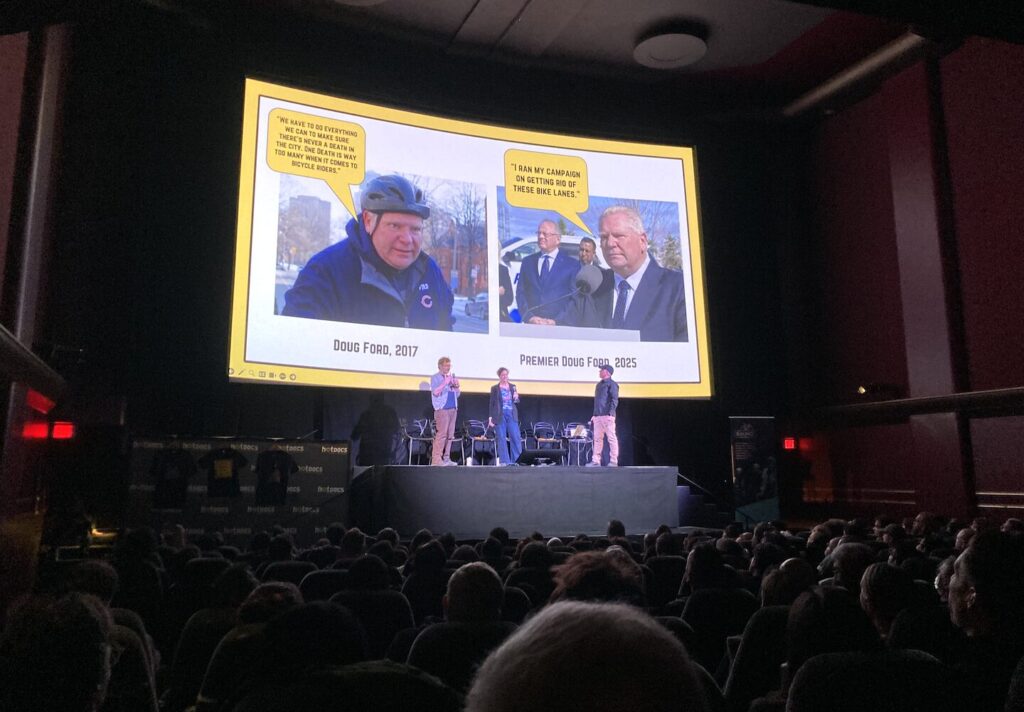
The focus then turned to Premier Doug Ford and his government’s current negative stand towards cyclists and bike lanes, which flies in the face of comments Ford made in a 2017 video when he and former NDP leader, Jagmeet Singh, rode bikes around the city. “We have to do everything we can to make sure there’s never a death in the city. One death is way too many when it comes to bicycle riders,” said Ford in the video.
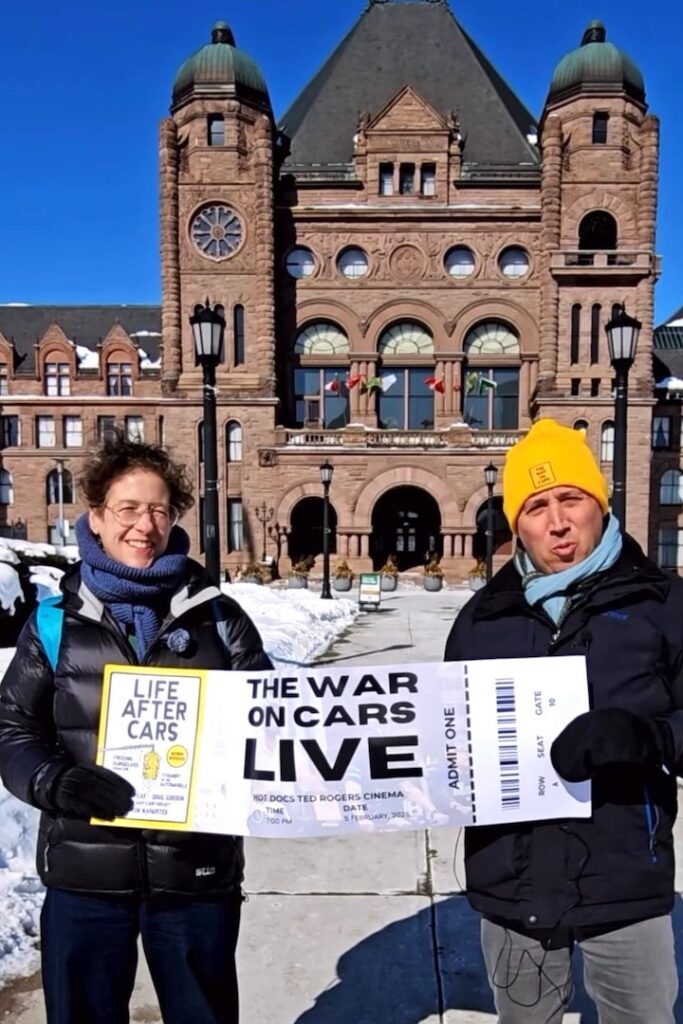
The podcast hosts even invited Ford to The War on Cars LIVE special evening event, and went to Queen’s Park with gigantic tickets to present to him in person but they were unable to deliver them – video here. While on stage Doug Gordon called Ford’s published number and left a message, wishing that Ford could have attended, which included a loud round of applause from the audience… video here.
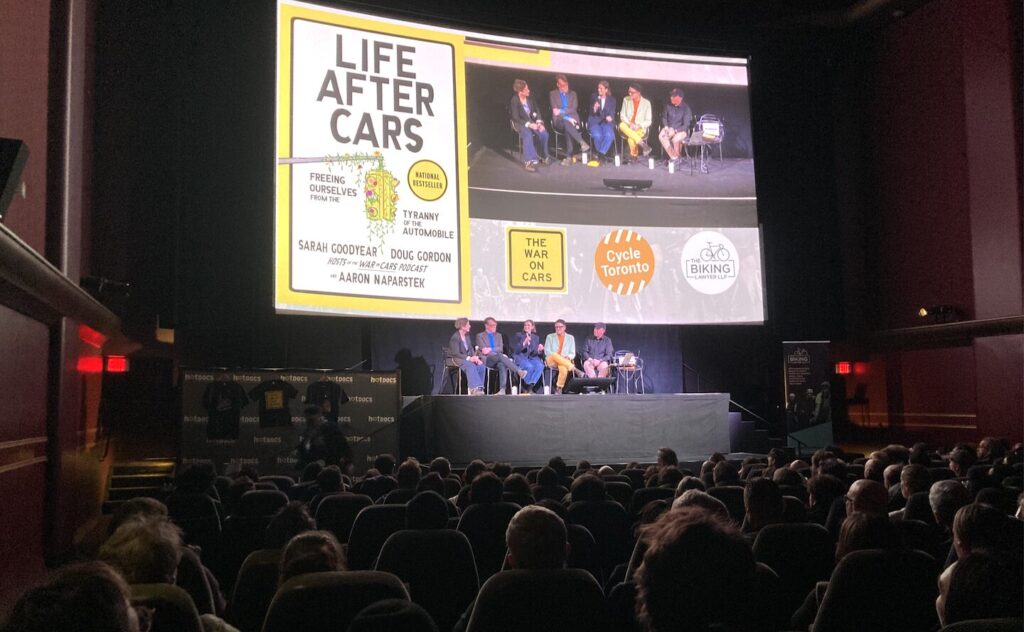
The discussion then focussed on the recent hearing at the Court of Appeal as they were joined on stage by lawyers from Cycle Toronto’s Charter challenge case, Andrew Lewis (Paliare Roland) and Bronwyn Roe (Ecojustice) along with author and Toronto Star columnist Shawn Micallef.
Back in July 2025, Cycle Toronto won their Charter challenge as Superior Court Justice Paul Schabas ruled against the Ford government’s plan to tear out dedicated bike lanes on three Toronto city streets, saying the move would be unconstitutional.
But the province appealed his ruling and on Jan. 28 a panel of three judges heard arguments from both sides. “It’s hard to know how the panel will react and rule on the presentations,” noted Lewis. “There is also the consideration of how their ruling might affect future cases.”

Roe commented on the government’s main claim which was that removing the bike lanes would help to ease congestion, “We presented evidence-based documents by experts that don’t agree with the government’s claims, and the province’s own experts did not believe that removing the three bike lanes will result in their stated goal, to improve congestion. The safety issues for cyclists is also compelling when government decisions are not made in accordance with the principles of fundamental justice.”
Public safety must be a paramount consideration in policymaking and Schabas’ ruling affirms that government action cannot knowingly make streets less safe, especially when it won’t achieve the goal of reducing traffic congestion.
Lewis added that even a ruling in favour Cycle Toronto is a temporary remedy. “The law won’t resolve the situation. Even if we win the government can look into other ways to achieve their agenda. The best solution is for the people to keep advocating and to vote in new leadership,” commented Lewis.
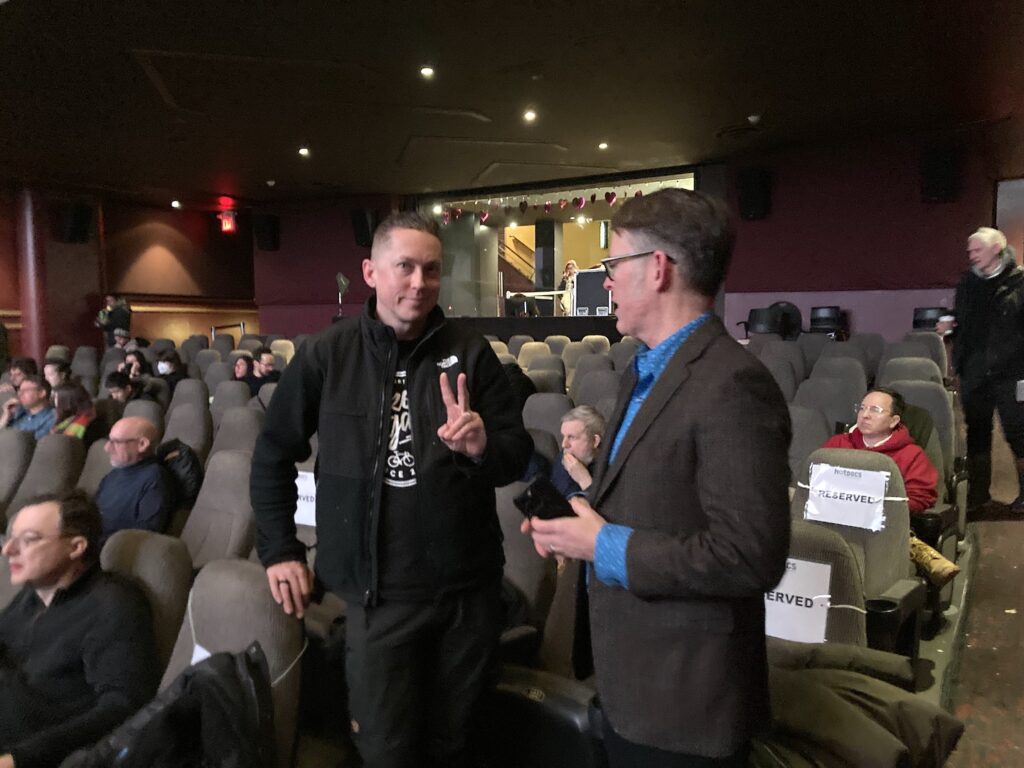
The evening finished with questions from the audience regarding speed cameras and e-bikes, and ended with a big round of applause as Doug Gordon noted that all cyclists, no matter what they ride, are in this together, so solidarity is key.
The event was organized by Cycle Toronto and sponsored by The Biking Lawyer and Spacing… look for The War on Cars LIVE in Montreal on April 9.