




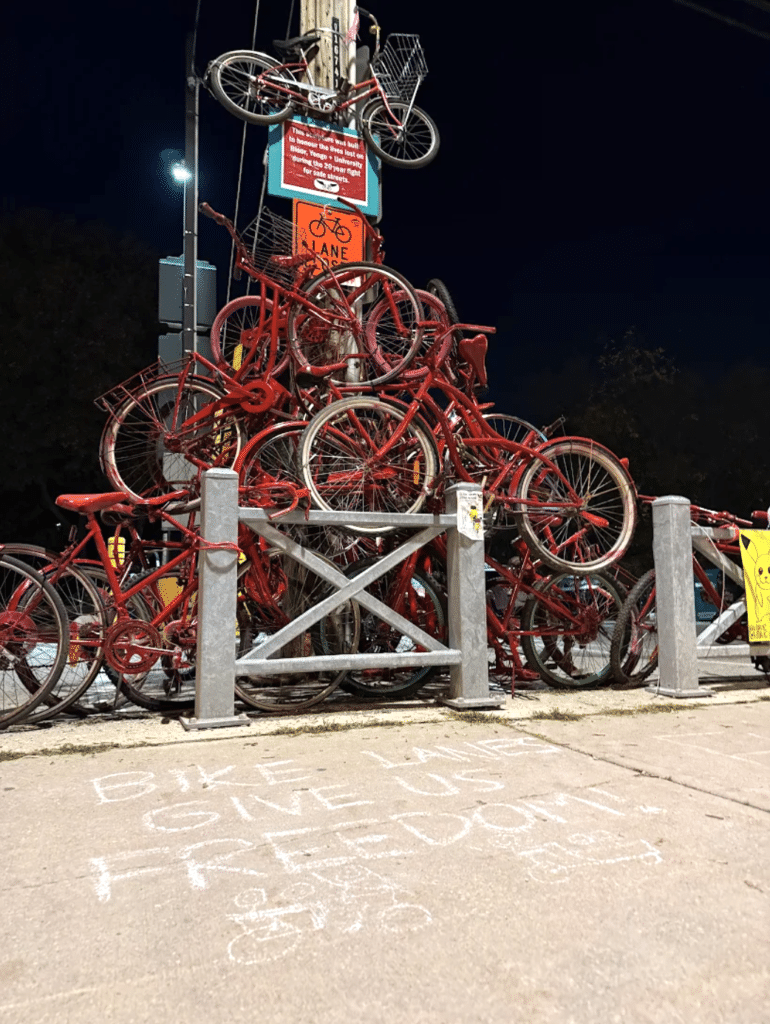
October 19, 2026 - This sculpture, erected overnight at Tom Riley Park on Bloor Street on Monday, October 19th, was built by community members to honour each of the lives lost on Bloor, Yonge and University Streets during the 20-year fight for safe streets.
Between 2000 and 2020, the years of key advocacy leading to the implementation of bike lanes on Bloor Street, Yonge Street and University Avenue, there were 32 deaths on these three streets alone. These people were members of our community: parents, children, teachers, friends and family, whose lives were lost as a result of unsafe car-centric road design. Deaths included 21 pedestrians, 4 people cycling, 3 people on motorcycles, and 4 people driving. Three of these people were school-aged children, and 14 were elders.
The City of Toronto has since adopted a Vision Zero Road Safety Plan backed with systemic efforts to eliminate deaths and serious injuries on our roads, and Complete Street Guidelines to direct the redesign of our streets to provide safe, efficient and predictable infrastructure to support safe driving and encourage people to walk, cycle and use transit to help tackle congestion in Toronto – North America’s fastest growing city – which would be doomed if we all kept driving!
A Complete Street design carefully reviews traffic volumes, transit demand and access, turning volumes, parking needs, and emergency services and solid waste collection needs to maximize the beneficial use of our limited road network – far beyond the historic two lanes of traffic with off-peak parking standard.
At worst, since the installation of bike lanes on Bloor in Etobicoke, people driving the entire corridor could see an up to 4-minute delay during the busiest peak traffic time. The benefits of safer roads far outweigh any marginal impacts to travel time. We might ask – what are drivers doing with those (at most!) four minutes that is worth risking someone’s life?
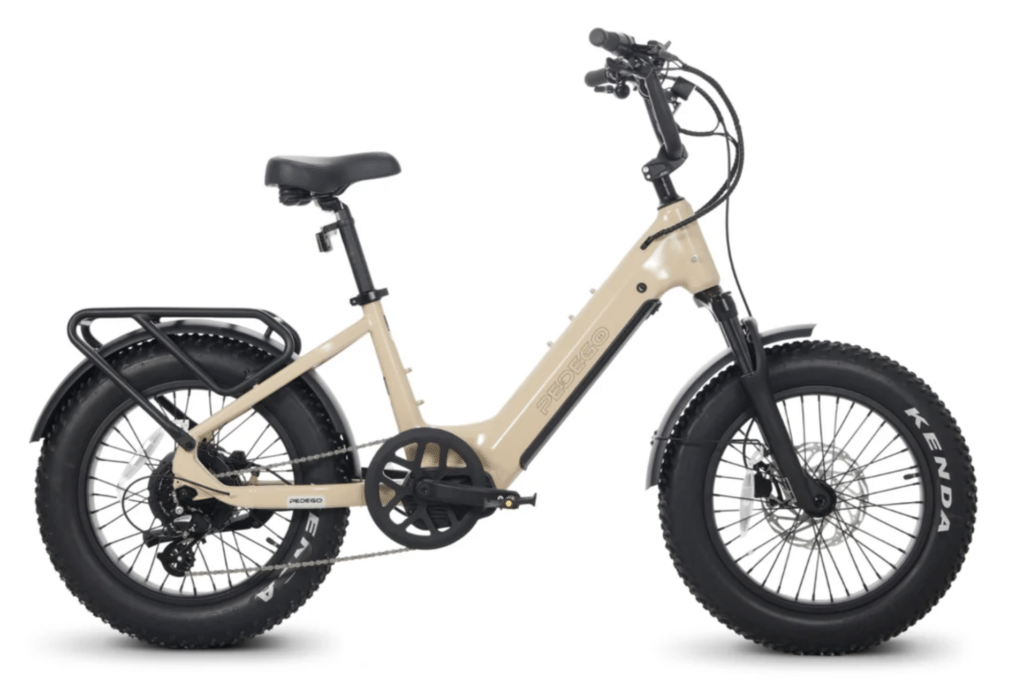
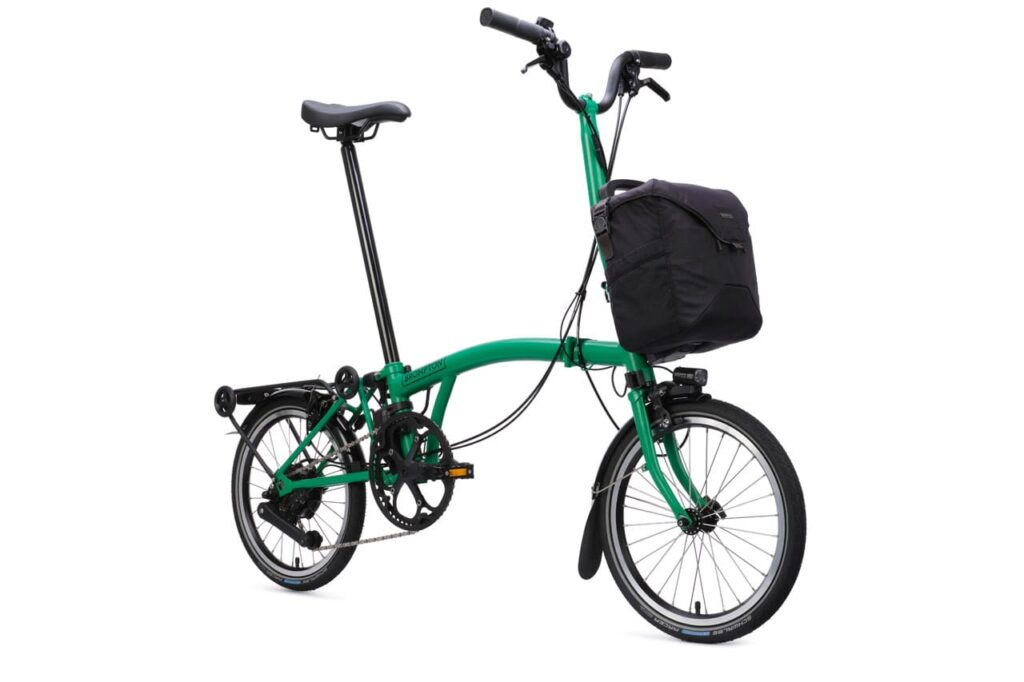
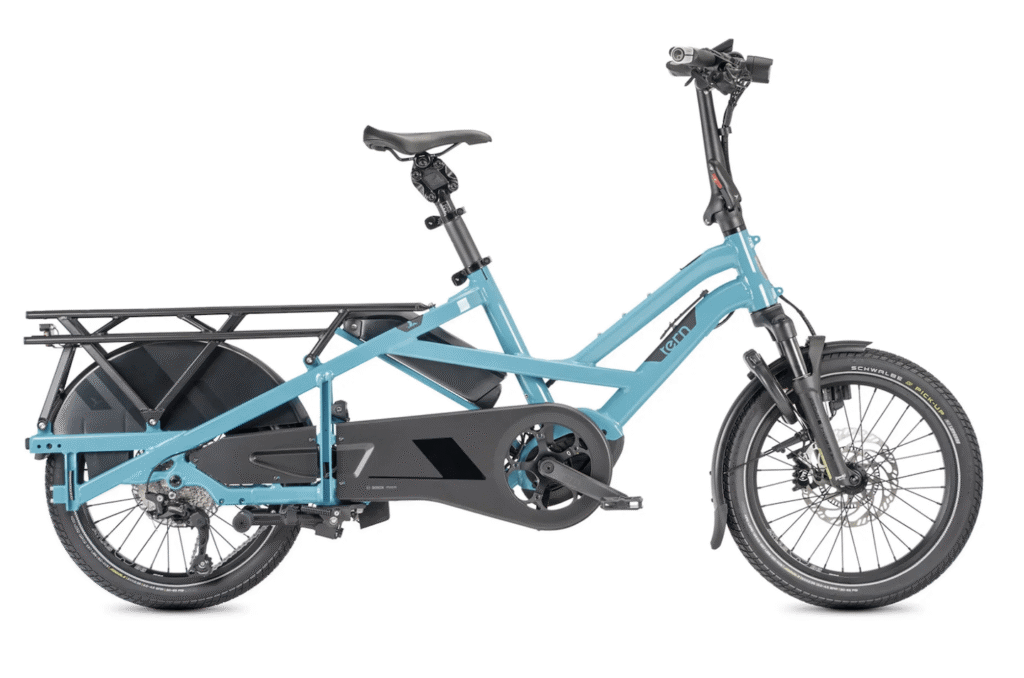
Each bike in the sculpture represents a life lost on Bloor, Yonge and University. Including serious, often life-altering injuries, there were 326 collisions with vulnerable road users on these three streets during this same 20-year span, with serious injuries outnumbering deaths 10:1 – numbers we’re likely to see repeated if bike lanes are removed on these streets.
When lives are lost, it won’t be an ‘accident’. It will be a result of a political decision with full awareness of the lives at stake.
Additional Info:
• There’s clear evidence many of these deaths would not occur again if the ‘complete street’ safety improvements remain in place, which improve safety for all road users, not only for people cycling.
• Ford’s own experts and internal government documents confirm their acknowledgement that ripping out Toronto bike lanes won’t reduce congestion, and it will put lives at risk. Their engineering assessment found that removing the bikeways and associated road safety facilities would negatively affect safety for all road users, not only cyclists, with a potential 54% to
101% increase in total collisions. Fords’ Bill 212 immunity clause proves that he’s aware that there will be injuries and lives will be lost.
• Recently published City data has confirmed that bike lanes currently being removed have already saved lives. After the bike lanes were installed on Bloor Street (West of Runnymede), there were fewer collisions and people killed or seriously injured.
• Reverting roads targeted by Bill 212 to the same street design that caused these deaths is paramount to premeditated road violence.