

• Flip Book • eNews • eAdventures • eCities • eCargoIntl • eBikeTypes • eRoad • eGravel • eMTB • eUrban • eCargo • eBikeTests • eAccessories • eBikeShops • eFeatures •
• Flip Book • eNews • eAdventures • eCities • eCargoIntl • eBikeTypes • eRoad • eGravel • eMTB • eUrban • eCargo • eBikeTests • eAccessories • eBikeShops • eFeatures •
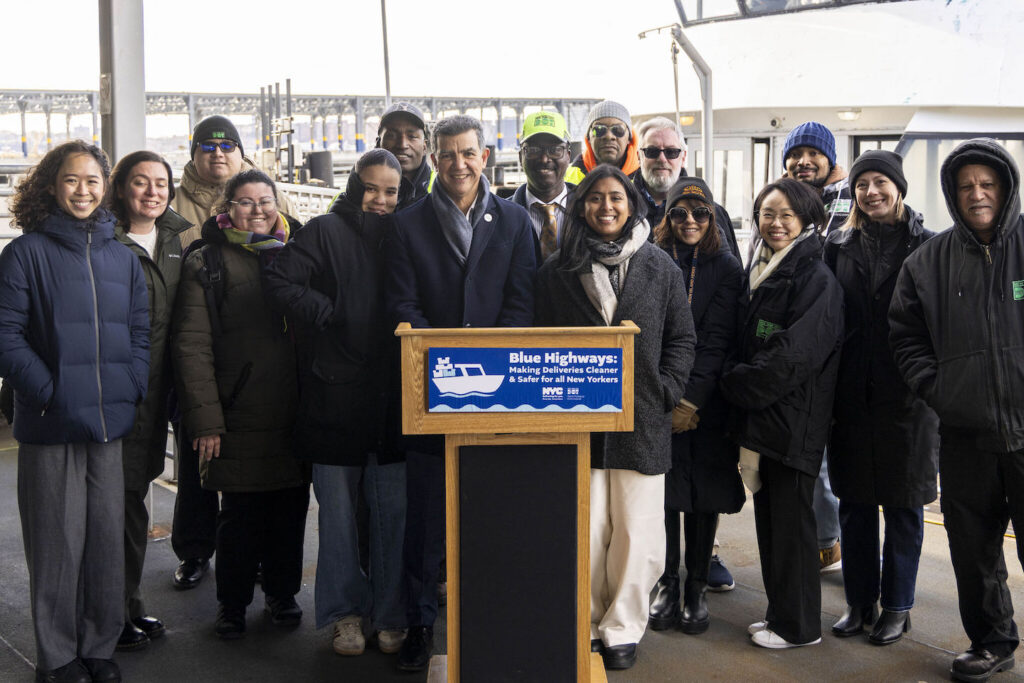
May 2, 2026 - On Oct. 31 last year, the New York City Economic Development Corporation (NYCEDC) and the New York City Department of Transportation (NYC DOT) announced the launch of the Blue Highways Action Plan, a comprehensive report focused on actionable steps to revive short sea shipping and maritime freight movement throughout New York City waterways.
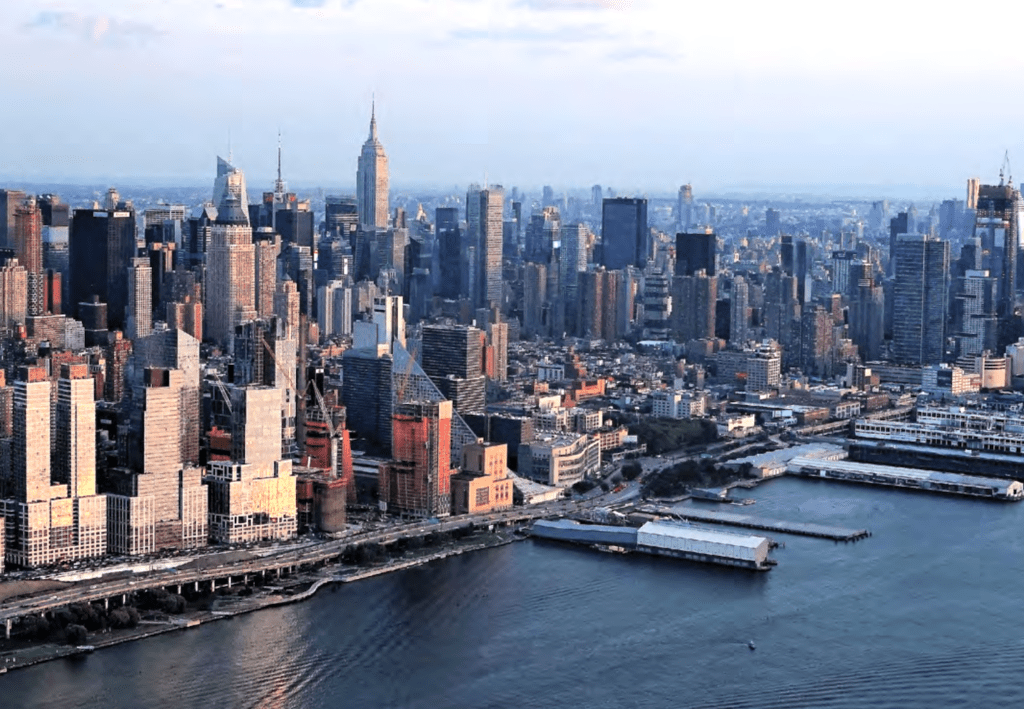
The Blue Highways Action Plan proposes a strategic shift: moving a significant portion of freight deliveries off crowded streets and onto the city’s navigable waterways, taking advantage of 520 miles of waterfront and last mile micro-delivery by commercial cargo bikes, which are smaller, cleaner and require less space at the port sites.
Each day, more than 44,000 trucks cross critical chokepoints like the George Washington and Verrazzano Bridges, leading to delays costing the city an estimated $20 billion annually in lost productivity, increased maintenance, and environmental impacts.
With freight volumes projected to grow by 67% through 2045, congestion and emissions from truck traffic pose increasing chal- lenges to New York City’s quality of life and infrastructure.
With nearly 90% of goods moving into and through the city by truck, a major component of the Blue Highways program is the prioritization of micro-freight mobility — small parcel- or package-oriented delivery with an emphasis on food, beverage, and small shipments destined for local markets — to aid in removing trucks from the streets.
By shifting freight from trucks to ships and promoting low-emission last-mile delivery methods, such as pedal- assist electric cargo bikes, the Blue Highways Action Plan will dramatically lower greenhouse gas emissions and improve air quality, while also improving street safety for the communities where deliveries are occurring and where ports are located. Each cargo bike in service saves seven tons of CO2 annually, with the potential to replace two vans or box trucks per day.
The City estimates that the use of barges will remove nearly 2,000 truck trips from the roadways of Lower Manhattan.
By leveraging publicly controlled waterfront assets, partnering with private industry, and investing in supportive infrastructure for last-mile micro-deliveries, the plan aims to reduce congestion, pollution, and roadway wear — while catalyzing economic growth and job creation.
Plans include mapping and the assessment of 25+ Blue Highways “opportunity sites” for activation, ranging from old piers to ferry landings to container terminals.
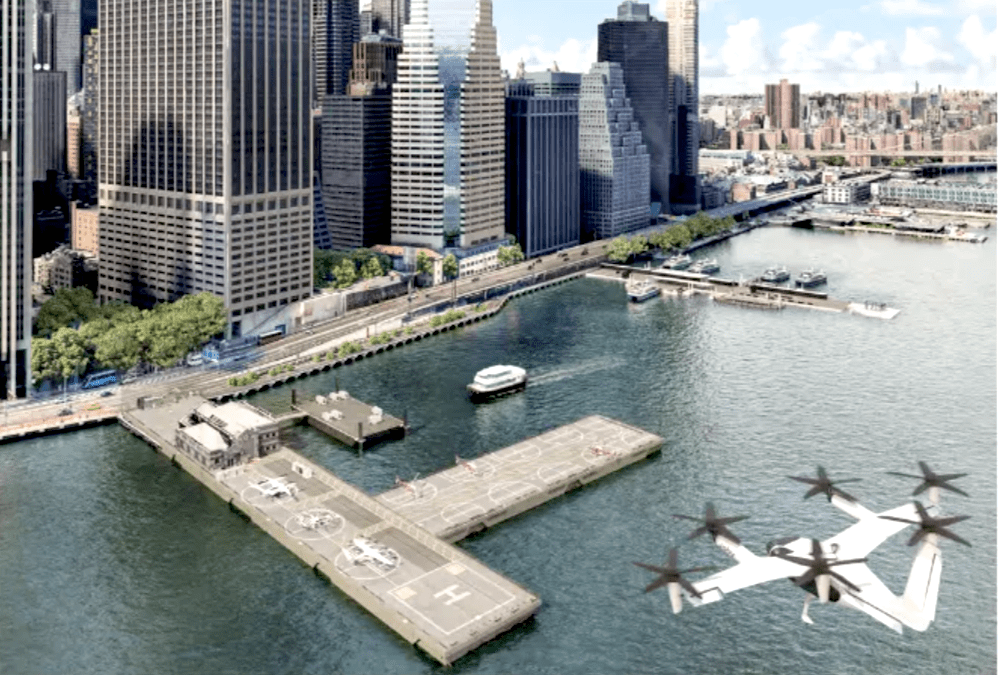
In the past two years, the Blue Highways program has accelerated rapidly including the creation of pilot routes using existing city assets, the announcements of a new Hunts Point Marine Terminal, a micro-freight facility at Downtown Skyport, as well as the recently approved and historic Brooklyn Marine Terminal (BMT) redevelopment project. The first Blue Highways micro-freight landing is slated to open at Downtown Skyport in Q4 2027.
A Blueprint for Blue Highways projects that the maritime sector will support 117,000 jobs in New York City by 2035 and build the Harbor of the Future — a reimagined network of innovation and growth across New York City’s waterways.
In March 2024, the NYC Department of Transportation (DOT) authorized the use of e-cargo bikes on city streets to make deliveries safer and more sustainable. Since the inception of the cargo bike pilot program, the use of commercial cargo bikes for deliveries has grown at least seven-fold, with an expectation for continued expansion with the City’s support.
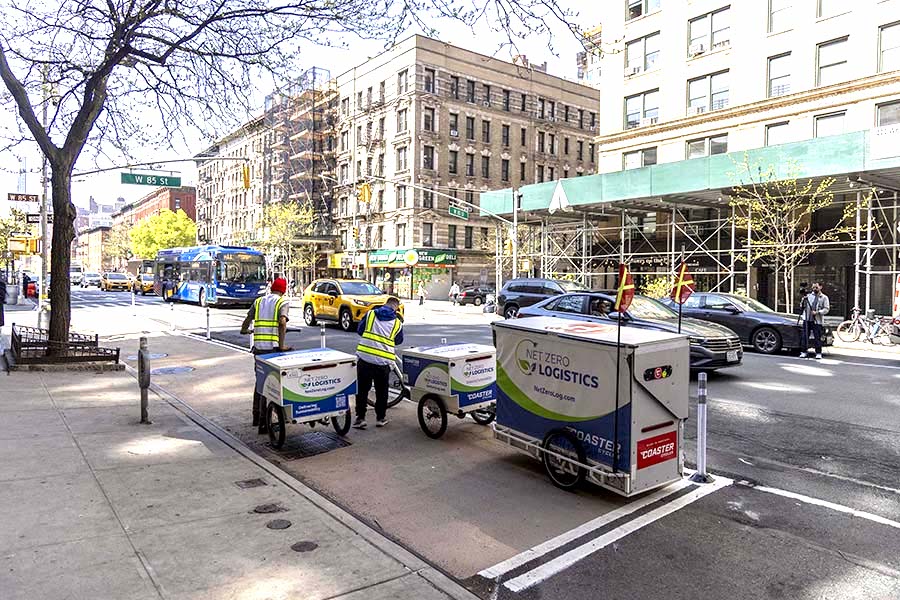
In April 2025, NYC DOT also launched the first pilot locations for its ‘Microhubs’ program that established safe, dedicated spaces for truck operators to transfer deliveries onto safer and more sustainable modes of transportation for the last leg of delivery, including e-cargo bikes, handcarts, and smaller electric sprinter vans.
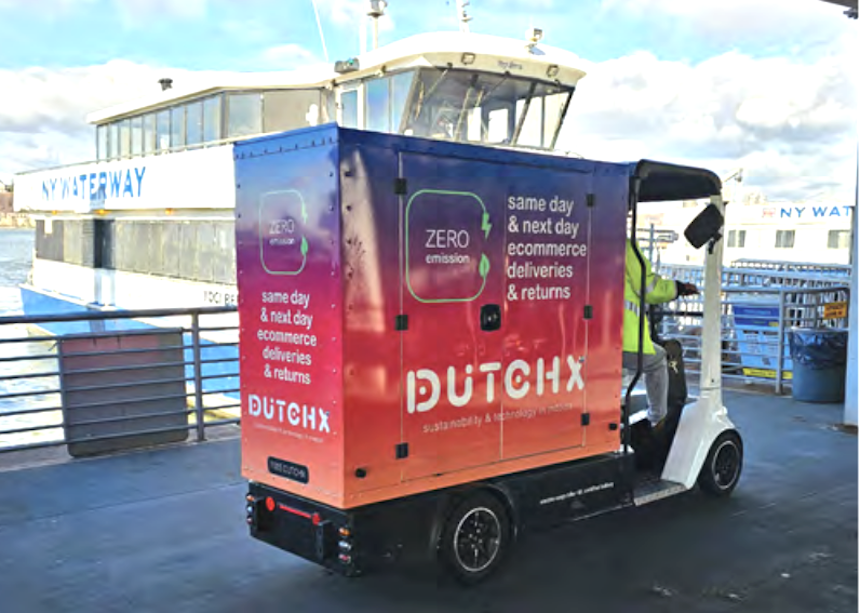
NYC micro-mobility logistics firms DutchX, Net Zero Logistics, and the Hub Bicycle have been involved with the project since the Blue Highways Action Plan was unveiled back in 2023. They have been active participants in the Blue Highways pilots that got underway in mid-December, using landings at BMT (in Brooklyn), Pier 11 (in Lower Manhattan), Pier 79 (on the west side of Manhattan) and others.
The start of the city’s so-called ‘back to the future’ use of waterways to transport goods saw the activation on Dec. 11, 2025 of a marine freight pilot between Manhattan’s Pier 79 and the Brooklyn Marine Terminal (BMT) with DutchX doing the honours of the last-mile deliveries.
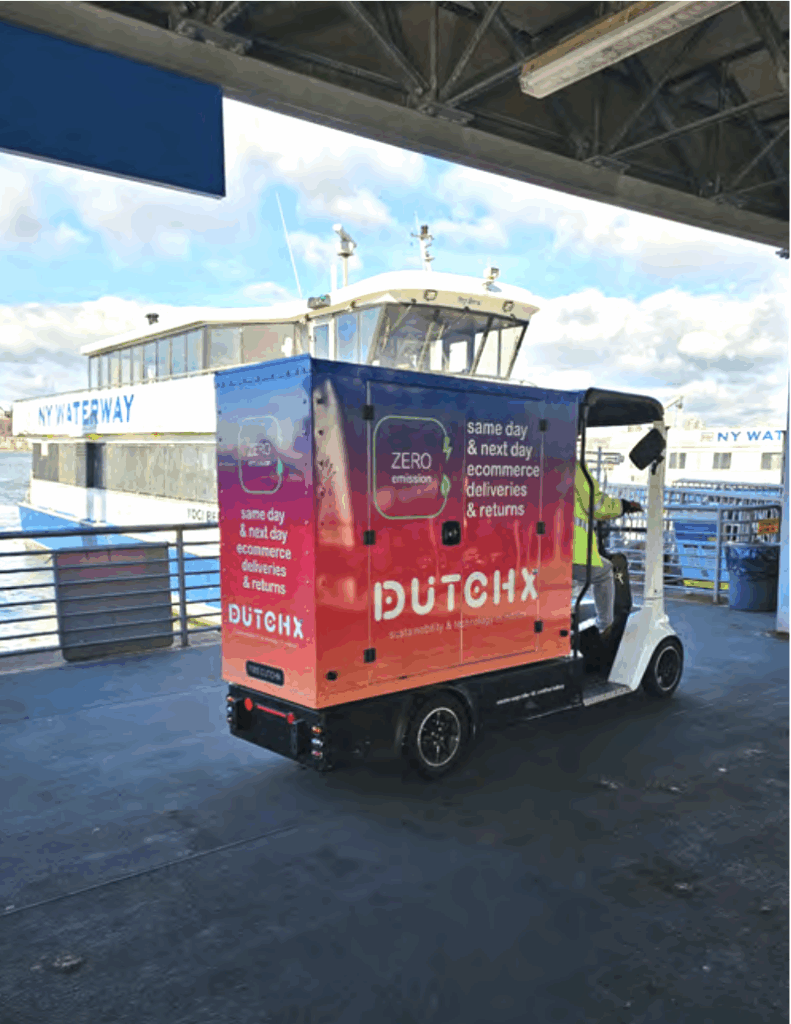
The pilot route was tested extensively by NY Waterway and DutchX and actually runs from Atlantic Basin in Red Hook (near BMT) to Manhattan’s Pier 79. DutchX began transporting 300 to 400 parcels per day, including cosmetics, fashion, lifestyle, and small household products, from a ferry onto five e-cargo bikes. According to Marcus Hoed, Co-Founder of DutchX, the company is now operating eight e-cargo bikes (600 parcels), and by the end of April expects to have 12 e-cargo bikes moving 900 parcels.
“I came to New York from Amsterdam twenty years ago, a city shaped by its waterways, so I’ve always believed this city could do more with its own,” said Hoed at the launch of the pilot. “In collaboration with NYC DOT, NYCEDC, and NY Waterway, DutchX has carefully prepared Blue Highways with a clear vision for a smarter way to move parcels through the city. By using the waterways as the new middle mile and completing the last mile with electric vehicles, we are creating a cleaner and more efficient path to the end-customer. Launching service from Atlantic Basin to Pier 79 shows what becomes possible when the waterways support the final stages of the supply chain. It proves that better options exist, and it is only the beginning of what this system will unlock.”
The City will monitor the success of this pilot route and gather data on frequency, capacity, and vehicle miles travelled (VMT) reduction. NYC DOT is working to develop similar freight models for three other piers: Pier 11, 34th Street Pier, and the Battery Maritime Building in coordination with NYCEDC.
DutchX and NY Waterways also tested a route from Weehawken, New Jersey, to Pier 79, with plans to launch a pilot service. This route will start small and plans to scale up to 5,000–7,000 parcels per day. The partnership has found a retailer that sees value in a seven-minute trip across the Hudson River to avoid the congestion on the George Washington Bridge or through the Holland Tunnel.
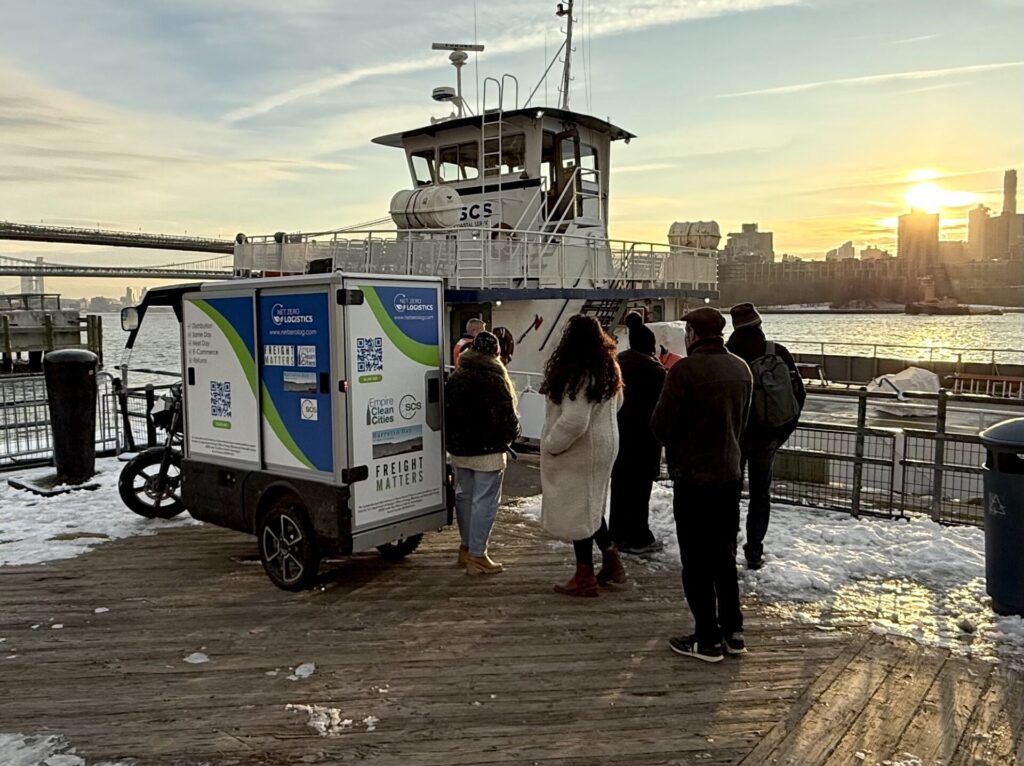
On Dec. 17, Empire Clean Cities, a not-for-profit environmental organization with a mission to reduce greenhouse gas emissions and ensure clean air for future generations, organized a “zero-emission demonstration delivery” from Blue Ribbon Fish to the Fulton Fish Market Cooperative, creating a route from the Hunts Point Con Agg Global Terminal in the Bronx, to the South Street Seaport at Pier 16 in Lower Manhattan.
From there, the seafood made the final 0.2-mile trip to the Tin Building by Jean-Georges, a 53,000-square-foot upscale food hall featuring restaurants and a seafood market in NYC’s Seaport District, via Fulpra/The Hub Bicycles cargo bikes operated by Net Zero Logistics.
The net positive result is that this low-carbon ferry/cargo bike solution replaces at least two seafood trucks delivering to Manhattan each day. Eventually, a permanent facility at the Hunts Point Con Agg Global Terminal will handle both aggregate and micro-freight goods, such as food deliveries, which would remove approximately 1,000 truck trips per month in the South Bronx.
“We are proud to participate in this first-of-a-kind sustainable delivery initiative in New York City,” said Steven Balinsky, CEO & Co-Founder of The Hub NYC at the launch. “Today we demonstrated how our Fulpra e-bikes serve as efficient last-mile delivery vehicles, transporting over 400lbs of fish at a third of the total cost of ownership of a delivery van. We look forward to 2026 and scaling up this delivery program and sales of Fulpra e-bikes.”
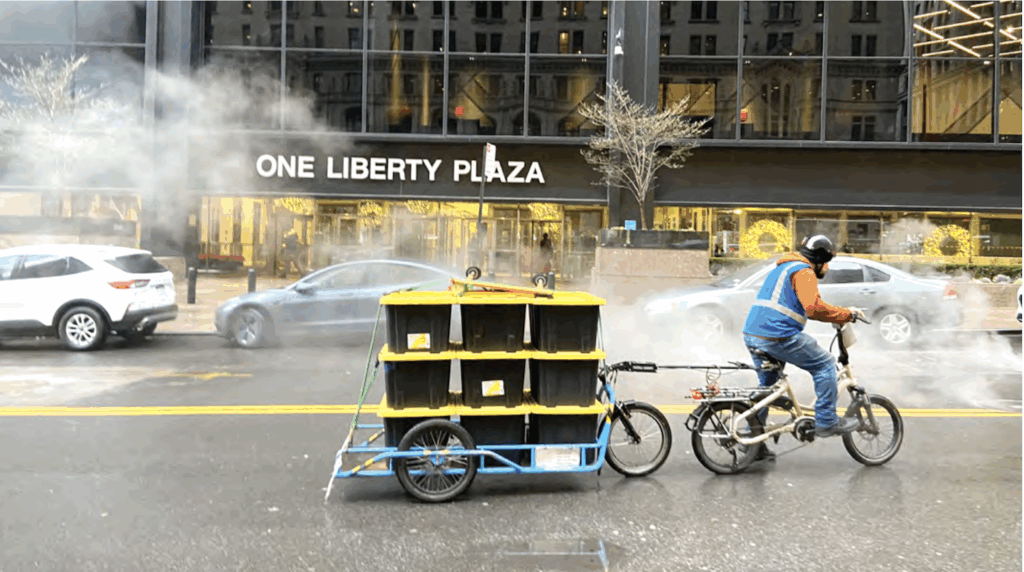
Mark Chiusano, CEO, Net Zero Logistics, echoed his enthusiasm. “The NYC DOT is one of the most forward-thinking transportation organizations in the country. This first delivery of Blue Ribbon Fish via Blue Highways represents more than a successful shipment — it demonstrates a new, lower-carbon future for urban logistics,” commented Chiusano. “By shifting freight from trucks to waterways, we are directly cutting greenhouse gas emissions, reducing congestion on city streets, and improving air quality for New Yorkers. Moving seafood from the Fulton Fish Market to the Tin Building by water shows how legacy supply chains can be reimagined to meet today’s climate imperative. This milestone also reflects the power of collaboration with ECC, Fulpra, Barretto Bay and Net Zero Logistics — partners who share our commitment to building scalable, zero-emission pathways for moving goods through New York City.”
The future of micro-mobility as an integral part of NYC’s transportation plan looks bright as progressive initiatives like the Blue Highways unfold. Additional projects include the Brooklyn Marine Terminal redevelopment, the Downtown Skyport Microfreight Terminal, and others. New York City is laying the groundwork for a revitalized maritime freight network that leverages its waterways to connect, rather than divide communities, and elevate the status of e-cargo bikes and micro-mobility to their rightful level of critical stature in the process.