

• Flip Book • eNews • eAdventures • eCities • eBikeTypes • eRoad • eMTB • eUrban • eCargo • eBikeTests •
eCargo Bikes – Cargo Bikes to Surge 66% Delivering Faster, Greener & Cheaper than Vans
October 28, 2021 - The recent 2021 European Cargo Bike Industry Survey by CityChangerCargoBike (CCCB) shows that cargo bike sales in Europe for both private and commercial use are expected to increase by a record 66%.
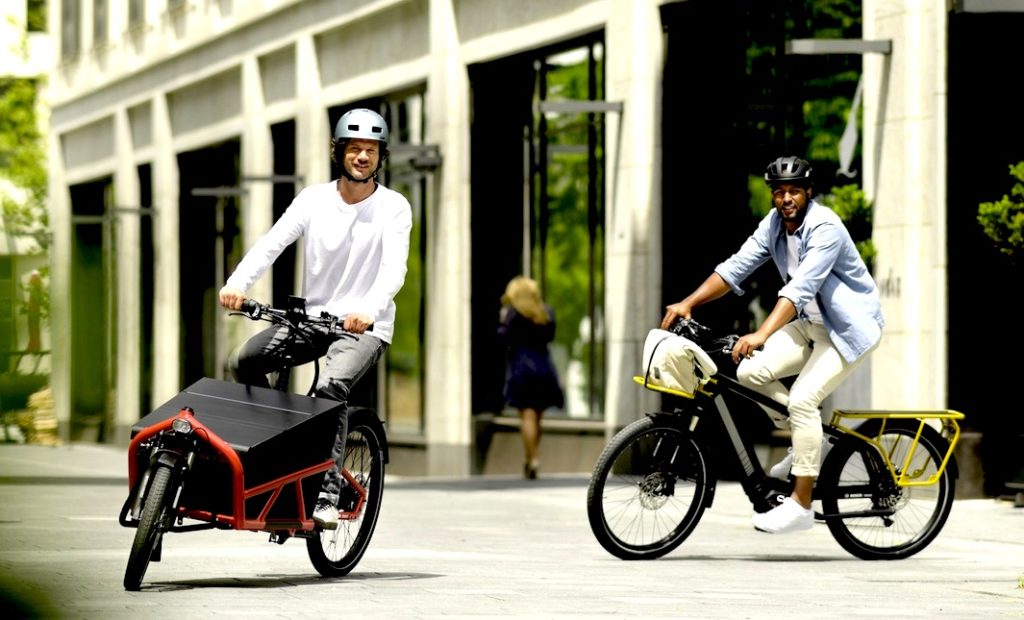
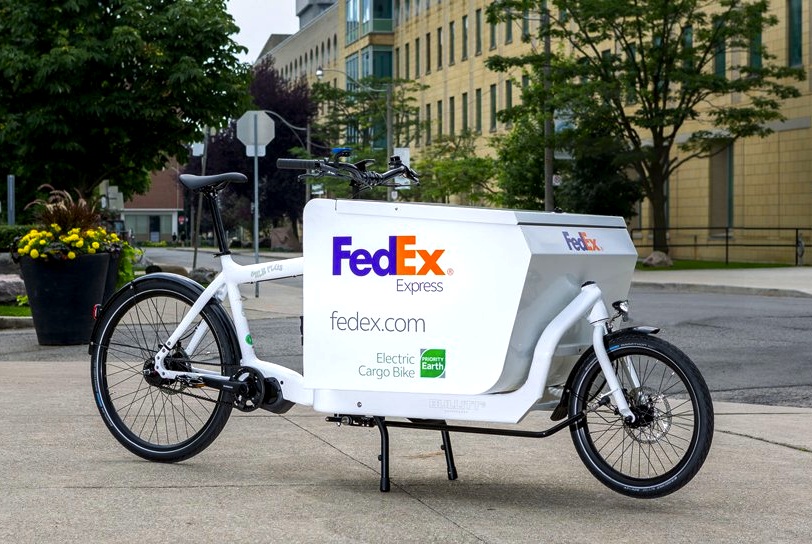
In September, FedEx became the first worldwide courier company to invest in a North American e-cargo bike fleet as part of a commitment to greening its entire fleet of delivery vehicles.
The company is currently hiring delivery riders for 50 e-cargo bikes across Canada for work in Vancouver, Toronto, Montréal and Calgary, bringing a living wage, a benefits package, and more dignity to cycling and a bicycle messenger’s job.
Earlier in March, Purolator became the first major Canadian courier company to launch its new green fleet of e-cargo bikes and electric delivery trucks nationally. Since the onset of the COVID-19 pandemic, Purolator has seen residential deliveries grow by approximately 50%.
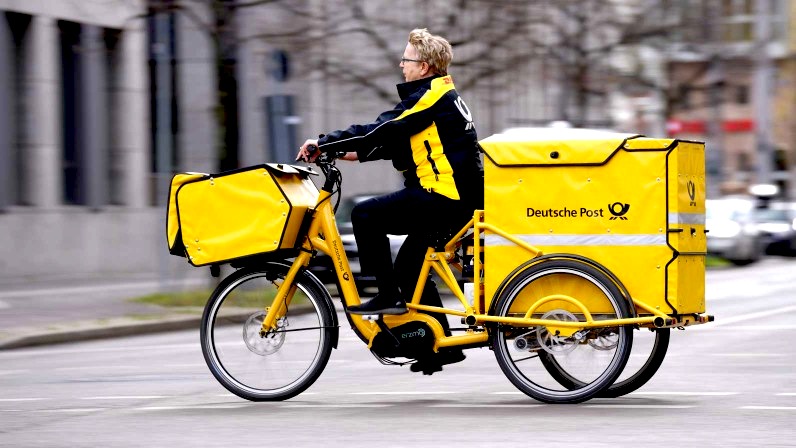
In April, Deutsche Post DHL Group, the world’s leading logistics company, announced it’s expanding its existing electric fleet by adding 8,000 e-bikes and 14,000 e-trikes by 2025. In 2020, a total of 58 million small parcels were delivered using carbon-neutral transport modes.
In Germany e-cargo bike sales were up 43% in 2020 as the segment cracked 100,000 units, while in France cargo bikes were up a whopping 345% to 11,000 units with huge growth predicted.
Forecasts in the UK, with 4,000 in e-cargo bike sales, show a 60% market growth while Austria reported that sales doubled to just under 1,000 units in 2020.
Berlin launched a commercial cargo bike incentive program offering 2,000 euros for an e-cargo bike, while Lisbon’s new strategic mobility plan, MOVE Lisboa, sparked a love affair with cargo bikes. Residents of Utrecht in the Netherlands will soon be able to access 100 e-cargo bikes via shared hubs.
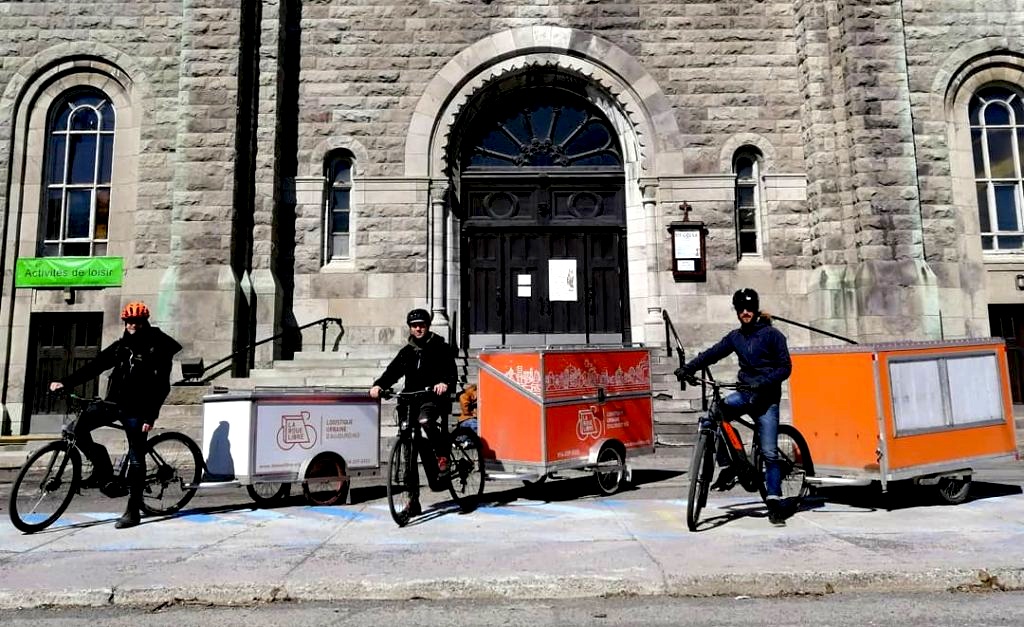
In Canada, Québec announced a new funding program for e-cargo bikes, effective Jan. 1, as part of its Green Economy Plan, offering a $2,000 rebate to businesses to encourage carbon-free delivery options.
Montréal’s Colibri e-cargo bike last-mile delivery initiative, launched in 2019 in collaboration with Purolator, continues to outperform.
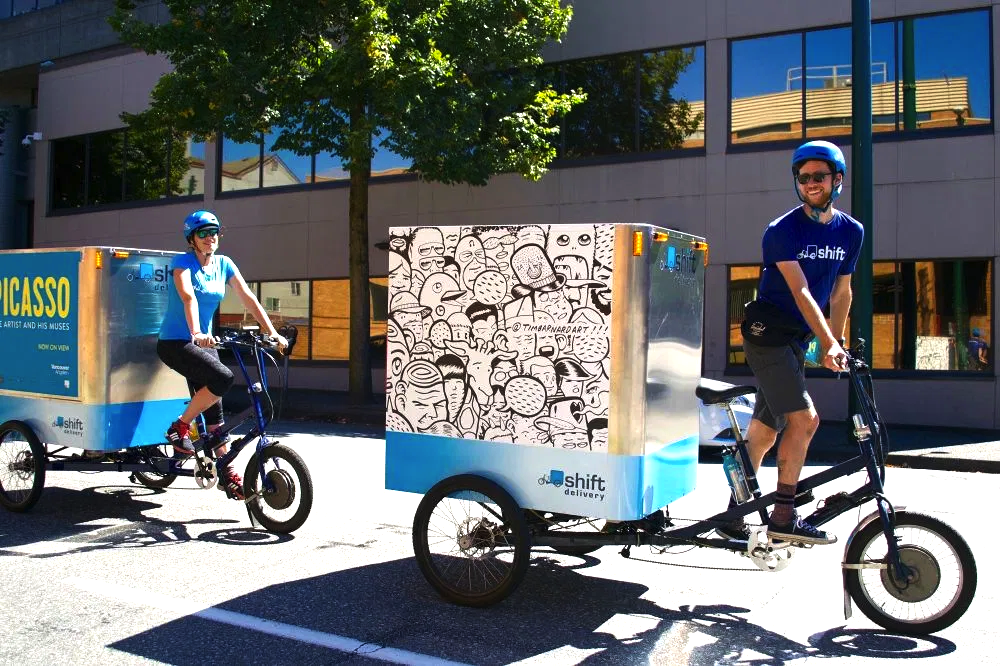
Shift Delivery Co-op, a worker- owned co-operative in Vancouver that pioneered e-trike and e-cargo bike inner-city deliveries, recently celebrated its 10th anniversary.
In early August 2020, British Columbia announced a one-year pilot where businesses can purchase up to five e-cargo bikes and receive a maximum rebate of $1,700 per vehicle.
BC also announced it’s contributing $200,000 as part of a partnership with the City of Vancouver to support an e-cargo bike micro hub project for last-mile deliveries.
In Sept. 2020, the Yukon announced rebates of up to $750 on e-bikes and $1,500 on new electric cargo bikes that qualify.
In Toronto, Happy Fiets Canada is now renting e-cargo bikes to residents while NRBI is offering B2B and B2C deliveries via high capacity e-cargo bikes. Our Greenway is also bringing mobility solutions to northwest Toronto.
In the US, Congress is reviewing the E-BIKE Act to offer incentives up to 30% off for e-bikes and e-cargo bikes to replace vehicle trips and reduce carbon emissions.
California is leading the way with its $10 million e-bike incentive program now in the state’s 2022 budget for consideration.
New York City launched a Commercial Cargo Bicycle Pilot in 2019 now with over 350 cargo bikes that saw a 109% increase to 45,000 cargo-bike deliveries.
In July 2021, Seattle launched a zero-emissions last-mile delivery hub as a pilot while Portland’s B-Line PDX and Benefit Corporation (B-Corp) promotes sustainable solutions. Chicago, Los Angeles, Miami and Boston are also seeing remarkable cargo-bike growth.
A recent study from Transparency Market Research suggests that the global cargo bike market is expected to surpass the $6.3 billion mark by the end of 2030.