










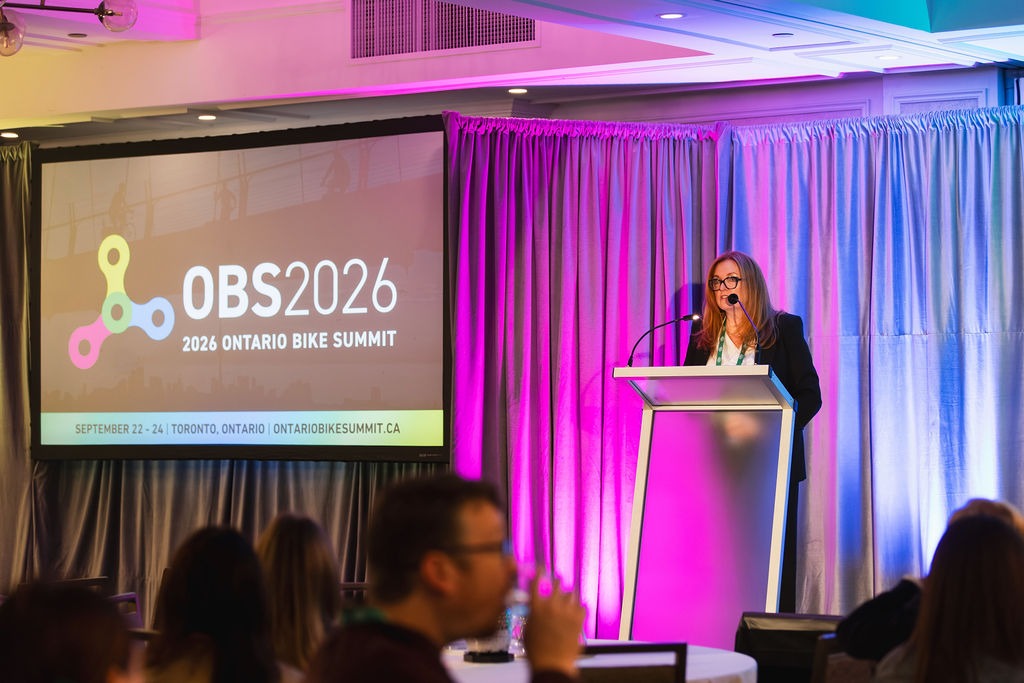
September 25, 2026 - (Toronto, ON) The final day of the 2026 Ontario Bike Summit at the Novotel Toronto Centre was full of anticipation once again as the organizer, Share the Road Cycling Coalition, had released a province-wide poll by Abacus Data showing that 64% of Ontarians say municipalities, not Queen’s Park, should decide on local bike lanes – read more here.
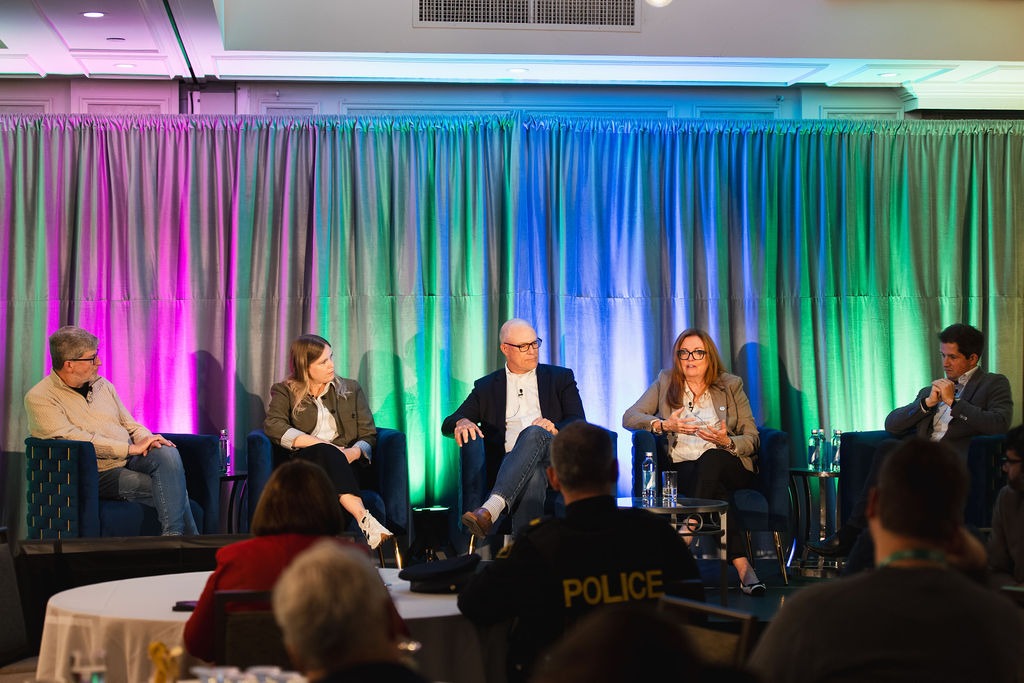
The opening session “From Division to Common Ground: Changing the Narrative on Cycling” saw a panel including Amanda O’Rourke, Executive Director, 8 80 Cities, Jeff Casello, PhD Professor, School of Planning and Department of Civil and Environmental Engineering | University of Waterloo, David Coletto Chair, CEO & Founder, Abacus Data, and Eleanor McMahon, Founder and Board Chair, Share the Road Cycling Coalition, moderated by journalist, John Lorinc, share strategies to counter the rising polarization around bike lanes by re-framing cycling infrastructure around people and economic possibilities, rather than a culture-war that pits one modality over another.
Drawing on a recent province-wide poll by Abacus Data commissioned by Share the Road Cycling Coalition, the speakers highlighted key operational and narrative hurdles such as the need for better municipal communication, misconceptions linking traffic congestion to bike lanes, and safety concerns over mixed-speed vehicles. They also spoke of the shift away from traditional commuting patterns, the needs of rural communities, and gendered trip patterns as opportunities to build safer roads that connect people and communities versus moving traffic.
The panelists advocated for elected and civic leaders, such as city mayors, to use positive messaging, public education programs, and evidence-based solutions to advance active transportation. They also agreed that having comprehensive parking strategies and implementing economic levers such as congestion pricing are needed to really shift behaviours, along with the importance of expanding targeted initiatives that get kids walking and biking to school, and growing cycling recreation and tourism.
Next up was “The Future in Motion: Micromobility, Disruption, and the new Mobility Reality” that brought together Adam Rosenfield, Director of Clean Transportation, The Atmospheric Fund (TAF), Armi De Francia, Active Transportation Coordinator, Town of Ajax, Mathew Varsava, Director – Bike Share and Micro Mobility, Bike Share Toronto (TPA), and Rachel Kamen, Public Affairs Manager, Waymo, moderated by Geoff Wilkinson Executive Director | Ontario Traffic Council, to address the challenges of the ever-changing mobility landscape.

These panelists from across the transportation sector emphasized that achieving equitable, safe, and sustainable urban transit requires integrating diverse mobility options, data-backed policies, and universal design. Speakers also pointed to the critical role of bike share rental programs and e-scooters as “first-and-last-mile” solutions that fill transit gaps, reduce vehicle kilometers traveled, and offer affordable transportation to equity deserving communities.
Waymo’s Kamen advocated for the role that autonomous vehicles can play to reduce human error from traffic safety, and TAF’s Rosenfield spoke of the need to ensure that before adopting technological innovations, leaders must measure success around the public interest, improving multi-modal connectivity, and the experiences of low-income communities, suburban residents, and people with disabilities.
The speakers all agreed that mobility options must be affordable, accessible, and inclusive for everyone, and expressed a desire for a future with fewer idle cars and more vibrant public spaces.
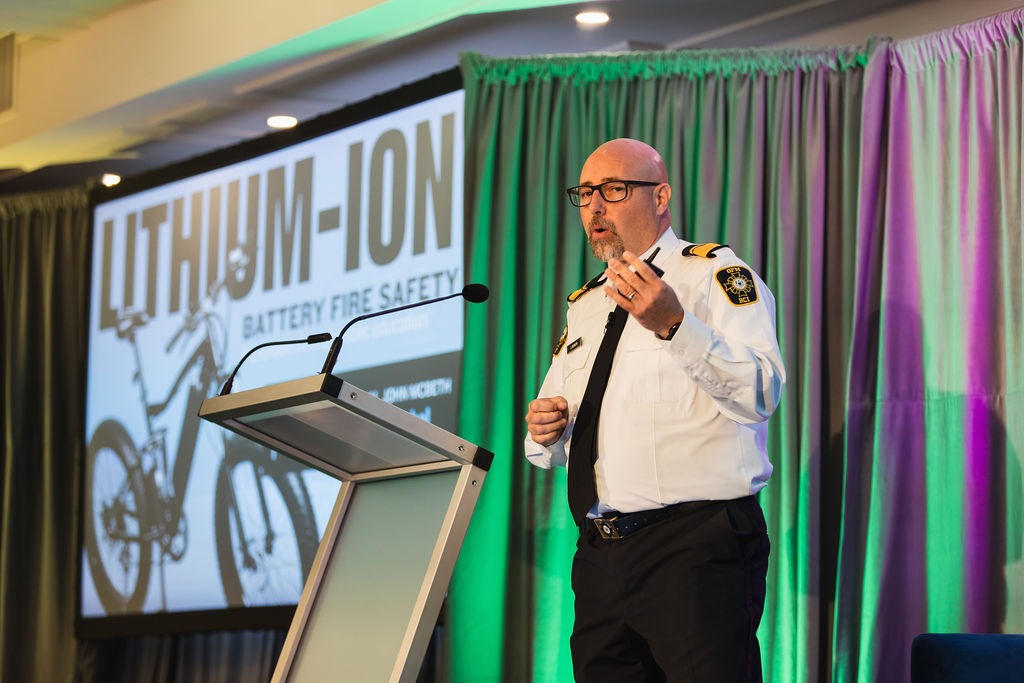
Then John McBeth, Deputy Fire Marshal, Training, Certification and Public Education, Office of the Fire Marshal, gave attendee a hands-on review of Lithium-Ion Battery Fire Safety Prevention Through Public Education
McBeth spoke of the urgent need to educate the public about lithium-ion batteries because they pose an unprecedented fire threat due to their ability to enter “thermal runaway”, which can result in a violent, unpredictable chemical chain reaction. Thermal runaway is an incredibly dangerous phenomenon that occurs with no advance warning bringing with it smoke that is highly toxic and fire that is hard to extinguish. The only safe option is to immediately evacuate the area and call 911.
Found in everyday household devices everywhere, lithium-ion batteries require strict safety precautions: consumers must purchase devices from reputable, certified and trusted sources, avoid charging them unattended overnight or near exit routes, and never dispose of them in standard garbage bins.
To address this growing widespread safety risk, the Fire Marshal’s Public Fire Safety Council has launched the Charged for Life campaign to inform the public on how to take precautions with lithium-ion batteries to protect themselves and others.

The final session Cycling Policy in Ontario – An All Party Conversation saw Catherine McKenney, Member of Provincial Parliament, New Democratic Party of Ontario, Eleanor McMahon, Founder and Board Chair, Share the Road Cycling Coalition, Mary-Margaret McMahon, Member of Provincial Parliament, Ontario Liberal Party, and Mike Schreiner, Member of Provincial Parliament, Green Party of Ontario tackle the tough issues for a sensible and progressive cycling policy in the the province.
This lively panel saw members of Ontario’s Provincial Parliament’s All Party Cycling Caucus share their experiences and approaches to advancing cycling policy. They emphasized the urgent need for cross-partisan collaboration and evidence-based storytelling to counter provincial interference and the rising polarization around cycling infrastructure.
They criticized provincial overreach and funding shortfalls, emphatically stating that local transportation choices must remain with municipalities, rather than being swept into partisan culture-war narratives. To build public support and confidence around concerns of safety, the speakers urged leaders to normalize everyday cycling, refute false claims that blame bike lanes for traffic congestion, and rally the majority of Ontarians who want safer streets.
Rather than treating cycling as a divisive “us vs them” issue, the caucus called for updating the provincial cycling strategy (last updated in 2013), to center on expanding affordable transportation options, investing in rural paved shoulders to support economic development and agri-tourism, protecting vulnerable gig workers, and framing active transit as a vital tool to reduce healthcare costs and traffic congestion.
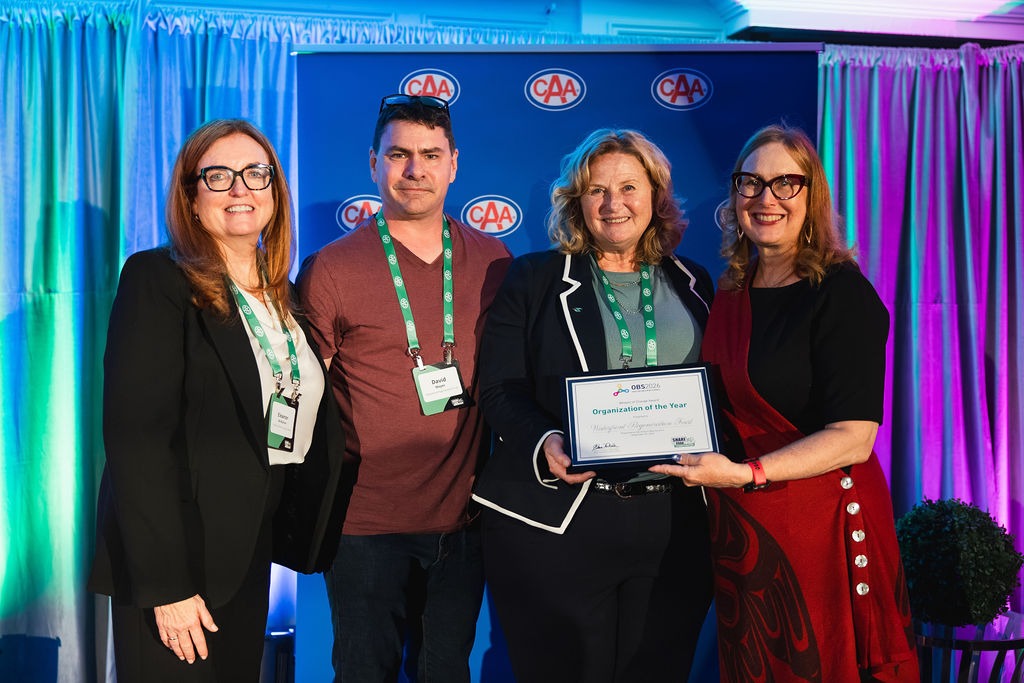
The Ontario Bike Summit recognized 19 recipients of Bicycle Friendly Communities (BFC) Awards at dinner on the previous evening. BFC provides a shared framework for sharing best practices and benchmarking progress, and more than just an award, it’s a roadmap for communities which guides local governments, advocates, and residents to work together, prioritize cycling investments, and build vibrant, inclusive, bike-friendly communities.
In her closing remarks, Eleanor McMahon, founder and Board Chair of Share the Road Cycling Coalition, thanked everyone for coming and building on the great cycling and advocacy community in the province that has made great progress, but needs to address the current challenges with confidence and look ahead to a brighter future.
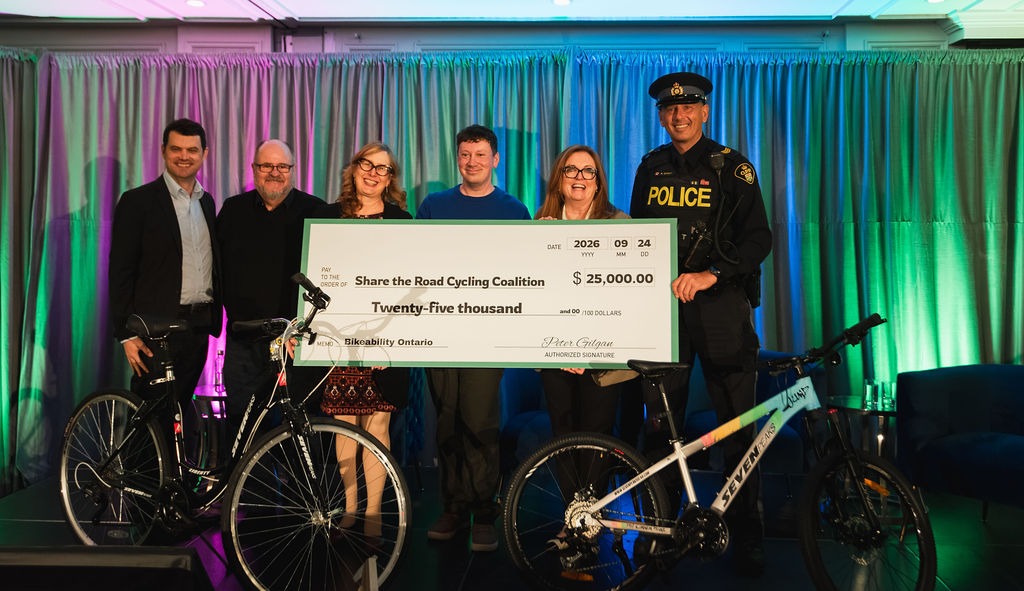
She also announced a generous donation of $25,000 by Peter Gilgan for STR’s new Bikeability project along with 60 bicycles from the OPP Youth Foundation.
Shawn Smith, Manager, Mobility Advisory and Planning at WSP Canada Inc. captured the spirit of this year’s Ontario Bike Summit on LinkedIn writing, “The passion, creativity, and determination from the attendees across municipalities, agencies, advocacy groups, consulting firms, and community organizations filled me with tremendous optimism for the future of our cities. Thank you, Share the Road Cycling Coalition Inc.”
For more on the OBS click here and for Share the Road Cycling Coalition click here.