
• Flip Book • eNews • eAdventures • eCities • eCargoIntl • eBikeTypes • eRoad • eGravel • eMTB • eUrban • eCargo • eBikeTests • eAccessories • eBikeShops • eFeatures •

• Flip Book • eNews • eAdventures • eCities • eCargoIntl • eBikeTypes • eRoad • eGravel • eMTB • eUrban • eCargo • eBikeTests • eAccessories • eBikeShops • eFeatures •
May 2, 2026 - Cycling continues to deliver many positive benefits as a mobility solution in cities and communities around the world. The popularity of e-bikes has helped to open the floodgates and elevate cycling as a more equal partner in transportation sectors around the globe. Yet alongside this widespread success and adoption, there are also critical challenges developing with respect to regulations and safety.
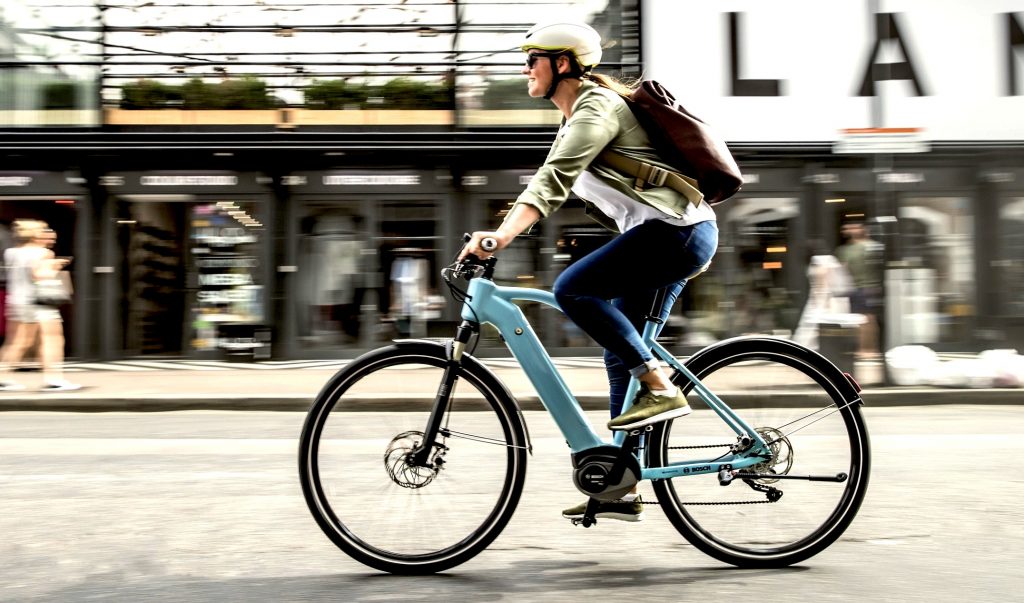
The current maelstrom is pitting e-bikes vs e-motos, which are electric motorcycles or off-road motorcycles that have been involved in recent crashes resulting in deaths. Yet these e-motos have been sold as “e-bikes,” and have also been reported as such, but don’t qualify as legal e-bikes, resulting in misinformation for both consumers and lawmakers.
The issue came to a head on Jan. 19 when New Jersey’s outgoing Governor, Phil Murphy, signed Bill S4834/A6235 into law, the day before he left office, resulting in New Jersey having the strictest regulations for electric bicycles in the USA.
One of the fatal crashes left a 13-year-old boy in Scotch Plains, N.J., dead last year, which led to Senate President Nick Scutari (D-Union) sponsoring the new bill. But the vehicles involved in many of the crashes are “e-motos,” not “e-bikes” as defined by law.
U.S. Federal law defines a “low-speed electric bicycle” as a bike that has pedal assist up to 20mph/32kph and is regulated by the U.S. Consumer Product Safety Commission (CPSC), rather than motor vehicles, which are regulated by the National Highway Traffic Safety Administration (NHTSA).
New Jersey’s controversial new e-bike law removes the current three-tier classification system (Classes 1, 2, 3) of electric bicycles in the USA that New Jersey and 46 other states have been using, and instead requires registration and licensing for all e-bikes, including insurance for Class 3 electric bikes (with pedal assist up to 28mph/45kph). The new law also bans online e-bike sales for one year.
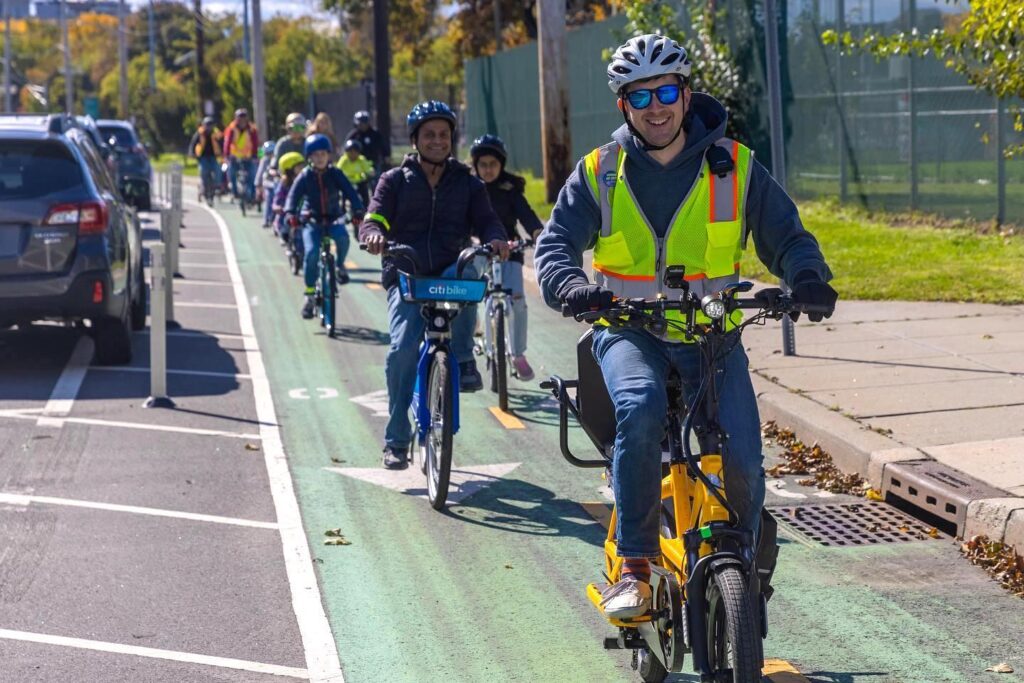
PeopleForBikes is fighting back, hoping to amend the legislation. “Far too many young people across the country are being seriously injured or killed while operating what they and their parents may believe are ‘e-bikes.’ Most often, these vehicles are not low-speed electric bicycles — they are actually much faster electric motorcycles or electric dirt bikes that are not safe or legal for kids to use on public streets. PeopleForBikes recently highlighted this growing issue in a three-part blog series discussing what we call the E-Moto Problem.”
According to PeopleForBikes, if S4834/A6235 does pass, it’s likely to be nullified by federal law.
“The new law fails to address the real safety issues that contributed to more than 500 fatalities and 3,000 serious injuries on New Jersey’s roadways in 2025: motor vehicles including unregulated, high-speed e-motos. We are currently cooperating on draft language for a new bill to address the issues created by this legislation and redirect the focus of regulatory and safety efforts on e-motos, the high-speed electric mopeds, motorcycles, and dirt bikes being marketed to kids in New Jersey and across the country, and the same devices involved in recent fatal crashes that led to this bill,” stated PeopleForBikes.
California is also fighting back. In late February, Sen. Catherine S. Blakespear (D-Encinitas) introduced
Bill SB 1167 that’s being touted as a template for other states and is co-sponsored by CalBike, PeopleForBikes, Streets For All, and Streets Are For Everyone.
“Increasingly, higher-powered electric motorcycles, commonly called ‘e-motos,’ are being marketed and sold as ‘e-bikes,’ creating confusion for families and regulators, as well as causing new safety risks on public streets,” claims Blakespear. “Bill SB 1167 strengthens consumer protections, clarifies the classifications of certain high-powered electric devices, and cracks down on deceptive marketing, making it illegal to advertise or sell electric motorcycles, mopeds, or other higher-powered vehicles as electric bicycles.”
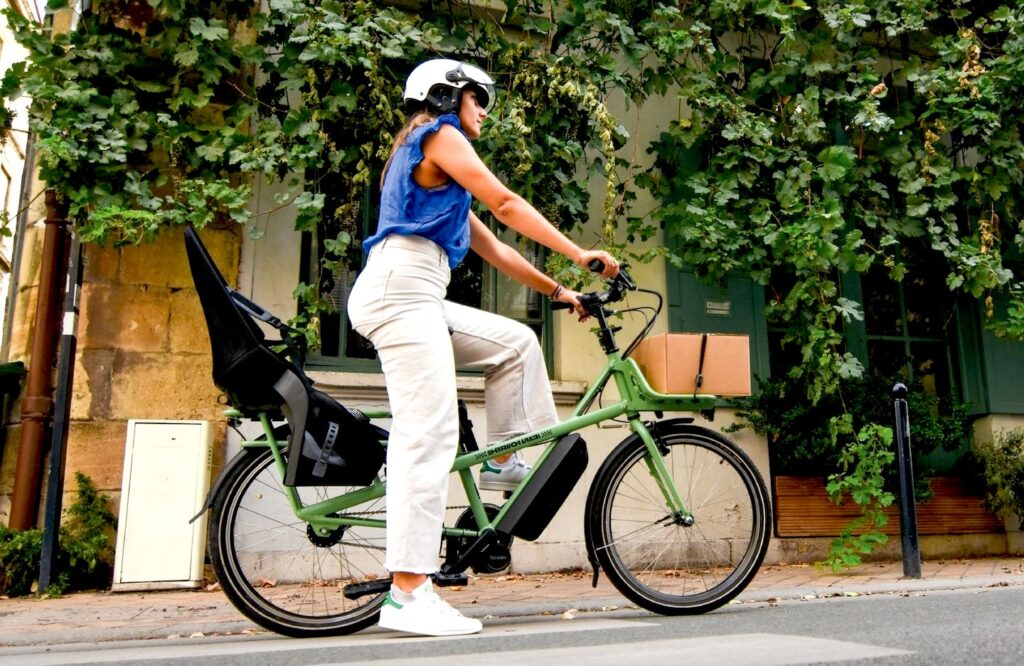
It also requires clear disclosure when a vehicle does not meet the e-bike definition and is subject to registration, licensing, helmet, and insurance requirements.
In April, California attorney General Rob Bonta and local District Attorneys issued a consumer alert to remind manufacturers, retailers, consumers, and parents that California has important safety laws regarding the sale and use of electric bicycles, also known as e-bikes.
“Two-wheeled vehicles that go over 28 miles per hour with pedal assistance or 20 miles per hour with throttle assistance are not e-bikes — under California law, they are mopeds or motorcycles and require additional licensing and age requirements to operate and sell. Importantly, modifying an e-bike to exceed the speed or power limits mentioned above is dangerous, may transform the e-bike into a motorcycle or moped under California law, and may be a crime if riders do not have appropriate licenses.”
Lack of federal legislation in the USA to provide overarching guidelines and laws has led to a fragmented playing field, as states have been left to develop their own specific e-bike regulations. This resulted in the three-tier classification system (Classes 1, 2, 3) for electric bicycles developed by PeopleForBikes that has been adopted by 46 states nationwide.
In early March, a new bipartisan Bill H.R.7839 was introduced to Congress by representatives Jared Huffman (D-CA), Dave Min (D-CA), Mike Lawler (R-NY), and Brian Fitzpatrick (R-PA), the Safe Standards for Personal E-Bike and E-Moto Device Specifications Act, or the Safe SPEEDS Act.
The new bill aims to give the U.S. Consumer Product Safety Commission (CPSC) the authority to define and regulate e-bikes and other electric micro-mobility devices, such as e-motos, at a national level in the U.S.
Endorsed by PeopleForBikes, the National Bicycle Dealers Asso- ciation (NBDA), the League of Ameri- can Bicyclists and others, the new bill fills a regulatory void, as federal e-bike safety standards haven’t been updated since 2002.
PeopleForBikes says the bill is “a significant step forward in addressing the increased use of currently unregulated products like electric dirt bikes across the U.S.”
E-Bike Lithium-ion Batteries
The rise of e-bike lithium-ion battery fires between 2022–2024 in cities like New York, Toronto, San Francisco, Montreal and many others that resulted in deaths, pointed to the lack of sensible regulations and guidelines to prevent such tragedies.
Many of the fires were linked to delivery workers using e-bikes, and the industry quickly rallied to establish certification guidelines for batteries and the entire electrical system on e-bikes. Despite this, bad actors con- tinue to bring in unsafe units as govern- ments have been slow to create sensible national and federal regulations, guide- lines, education and enforcement.
In Dec. 2023, the U.S. House Energy and Commerce Committee approved the Setting Consumer Standards for Lithium-Ion Batteries Act (H.R.1797) in a unanimous, bipartisan 42-0 roll call. Later in August 2024, the U.S. Senate Commerce Committee approved the Lithium-Ion Batteries Act,
marking another step forward to enact the important safety bill into law. The next step, as yet to happen, is for the Bill to move to the Senate floor, which will be followed by a review by a conference committee made up of House and Senate members before final approval.
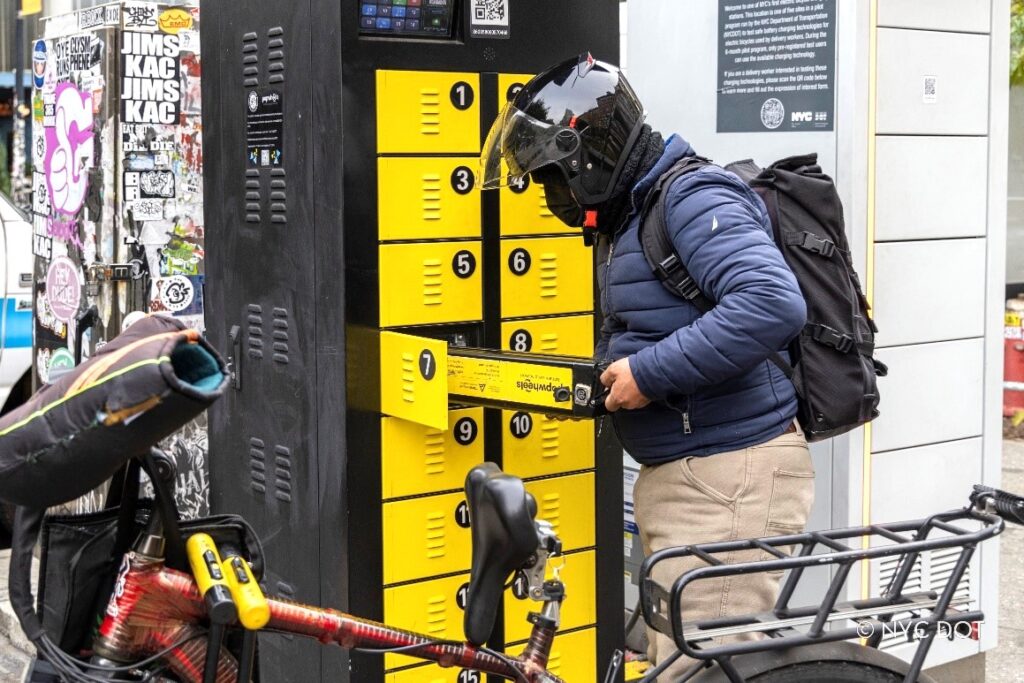
New York City became a leader by activating the first of five public e-bike battery charging locations in 2024. This initiative was part of the city’s new six-month pilot program to test safe, public charging of lithium-ion batteries by an initial group of 100 delivery workers.
The successful pilot saw over 8,000 UL-certified lithium- ion batteries being swapped and nearly 1,000 on-site e-bike charges being made by participating delivery workers.
Companies like Popwheels based in Brooklyn, NY, who participated in the pilot, provide battery-swapping cabinets and infrastructure for e-bike delivery riders, and currently operates 30 stations in NYC servicing about 1,000 delivery workers. Popwheels is expanding its operations locally and in other cities across the USA, and recently set up a station in Toronto, the first ever in Canada.
Their innovative battery-swapping infrastructure reduces the risk of battery fires by allowing delivery workers to exchange their depleted battery for a fully charged one via a Popwheels battery-swapping cabinet.
Canadian Scene
A similar situation exists in Canada, where the federal government’s definition of “e-bikes,” commonly referred to as power-assisted bicycles under the Highway Traffic Act, was repealed by Transport Canada in February 2021, putting the onus back on the provinces, resulting in a patchwork of laws and guidelines.
The federal definition, which included bicycles with electric assist as well as “mopeds” or low-speed electric motorcycles, remains in place until the provinces pass new definitions.
Following a recent increase in incidents involving e-motos and e-scooters vs e-bikes, the Office of the
Chief Coroner in Ontario waded in, calling for clarity, as the broad e-bike definition referencing both bicycle-style and motorcycle-style e-bikes adds to the confusion. “The Ministry of Transportation of Ontario (MTO) should consider a separate classification approach for all low-speed electric motorcycle-type and ‘Vespa like’ scooter-type vehicles.”
At press time the province announced a new regulatory framework for e-bikes, proposing new definitions and a two-class system for power-assisted bicycles, while requiring moped/scooter- or motorcycle-style electric motor vehicles to meet the requirements of an existing motor vehicle class under the Highway Traffic Act and have licensing and insurance.
The amendments appear to address the “e-bike vs e-moto” problem that is a growing concern in Canada, the USA and abroad.
In addition, the minimum age of 16 for passengers has been removed which is good news for cargo-bike owners who can’t legally transport their kids under the current regulations.
Not all stakeholders are happy with the framework, pre-ferring education and enforcement as first steps. Comments are welcome until June 8.
The increase in lithium-ion battery fires also hit Canada and led to local restrictions in Toronto, where Metrolinx banned uncerti- fied lithium-ion batteries from all GO Trains to ensure safety. Only e-bikes with batteries featuring UL or CE certification are permitted.
On a positive note, Metrolinx also announced that due to increased demand for bicycle and e-bike transport on the GO Train network, it’s planning to build eight additional designated bike coaches, which is more than double the current number of bike coaches in its fleet.
In 2024, new challenges emerged for cyclists in Ontario as Premier Doug Ford’s government passed Bill 212, allowing the province to regulate bike lanes if they involve the removal of a lane of traffic — even permitting the removal of existing bike lanes, including three major bike lanes on Bloor St., Yonge St. and University Avenue.
Cycle Toronto fought back and won, claiming that Bill 212 breached section 7 of their Charter rights to life, liberty and security. The province appealed, and a panel of three judges on the Court of Appeal for Ontario heard arguments in late January and is reviewing the case.
Along the way Bill 60 was also passed by the Ford government, banning Ontario cities from building new bike lanes if they would impact a car lane, full stop.
More controversy emerged last summer in Halifax, Nova Scotia, which first made headlines as city council voted 12–5 to defeat the Mayor and continue moving ahead with its bike network. Yet, soon after, it reversed a decision to proceed with a bike lane as Nova Scotia Premier, Tim Houston, threatened to use new legislation — Bill 24 — that gives the province authority over municipal transportation decisions, similar to Ontario.
Around the same time, Alberta’s Transport Minister, Devin Dreeshen, signalled that cities in the province, particularly Edmonton and Calgary, should alter or remove any cycling bike lanes that impede automobile traffic, threatening to table legislation that would give the province the power to do so, echoing the scenario in Ontario.
Meanwhile B.C. recently introduced new legislation for “Standard” vs. “Light” E-Bikes (B.C. Reg. 64/2024). Standard e-bikes allow a maximum 500W motor, up to 32kph, with throttle or pedal-assist, and a minimum age of 16, while Light E-bikes allow a maximum 250W motor, up to 25kph, pedal-assist only (no throttle), and a minimum age of 14.
Back in July/August 2024, Quebec modified their e-bike regulations prohibiting scooters or motorcycle-style e-bikes without operable pedals, or with footrests/moped-style bodies, on public roads. Riders must be at least 14 years old and all e-bike riders must wear a helmet. As well, a manufacturer’s compliance label must be permanently affixed to the e-bike.
As the e-bike and e-mobility sector continues to evolve for both personal and commercial use, it is incumbent on politicians to enact fair and sensible regulations for everyone’s safety.