

• Flip Book • eNews • eAdventures • eCities • eCargoIntl • eBikeTypes • eRoad • eGravel • eMTB • eUrban • eCargo • eBikeTests • eAccessories • eBikeShops • eFeatures •
• Flip Book • eNews • eAdventures • eCities • eCargoIntl • eBikeTypes • eRoad • eGravel • eMTB • eUrban • eCargo • eBikeTests • eAccessories • eBikeShops • eFeatures •
May 3, 2026 - Taipei Cycle, the preeminent industry cycling show in Asia, and top-tier worldwide, was held March 25-28 at the TaiNex Exhibition Hall 1 and 2. Over 900 exhibitors, from more than 30 countries, filled 3,650 booth spaces for a mammoth show bringing together the global cycling community.
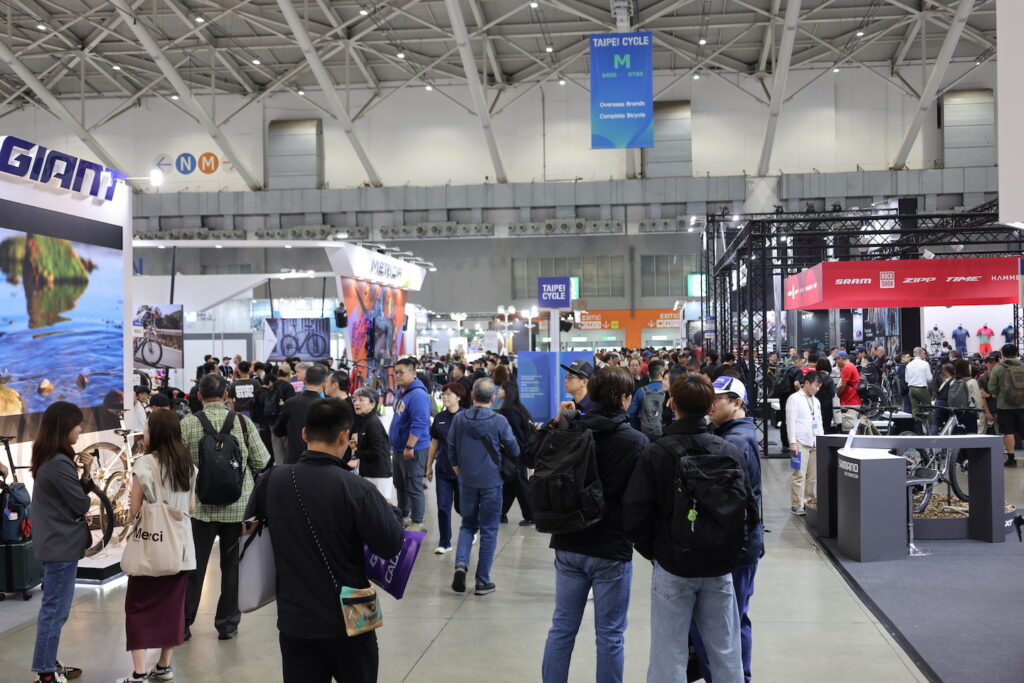
The mood at this year’s show was somewhat subdued yet still optimistic, as the industry is still in recovery mode. While attendance numbers haven’t been officially released, there appeared to be fewer attendees than in previous years.
Some potential visitors were not on site due to the current conflict between the USA and Iran, causing flight restrictions through the Middle East, a major flight path for some travellers coming from Europe to the show.
Also, the industry is still managing inventory levels from past years. While things have improved, some bike companies, distributors and retailers are still holding off on new purchases until the situation normalizes. While attendance numbers may be slightly down, innovations and development have continued to forge ahead. Green initiatives were featured, including the show’s main theme of Cycling to Wellness, which was apparent throughout the event and at all of the industry forums held at the show.
The main Cycling to Wellness theme was in response to the rise in global healthy lifestyle trends, along with sustainability trends. This year’s show also emphasized supply chain strengths, innovation, and cycling culture to help establish Taipei Cycle as the premier show that brings together the cycling industry from around the world.
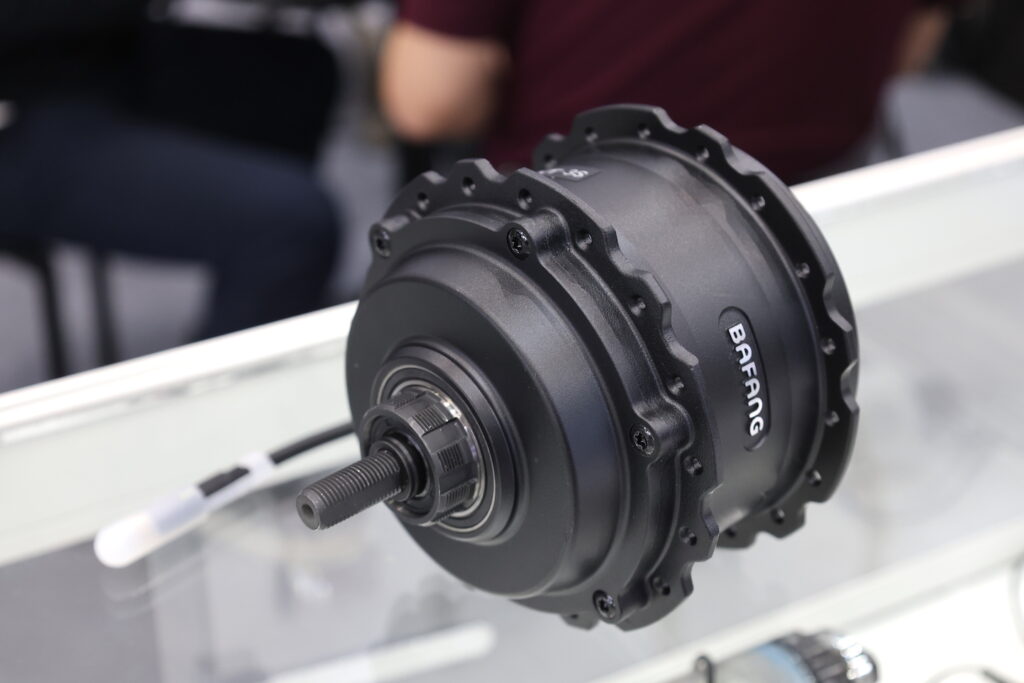
Bafang was showing its innovative 3-speed H730 rear-hub motor that utilizes its patented Gear Variable Transmission (GVT) technology, which uses torque sensors and a controller to change the gears within the hub. The gears shift automatically depending on riding speed to maintain smooth transitions for the rider. With 250 watts of power, it weighs 3.5kg and makes city riding simple, easy and enjoyable. Its weather-proof construction also ensures reliable performance in harsh conditions, significantly reducing maintenance needs.
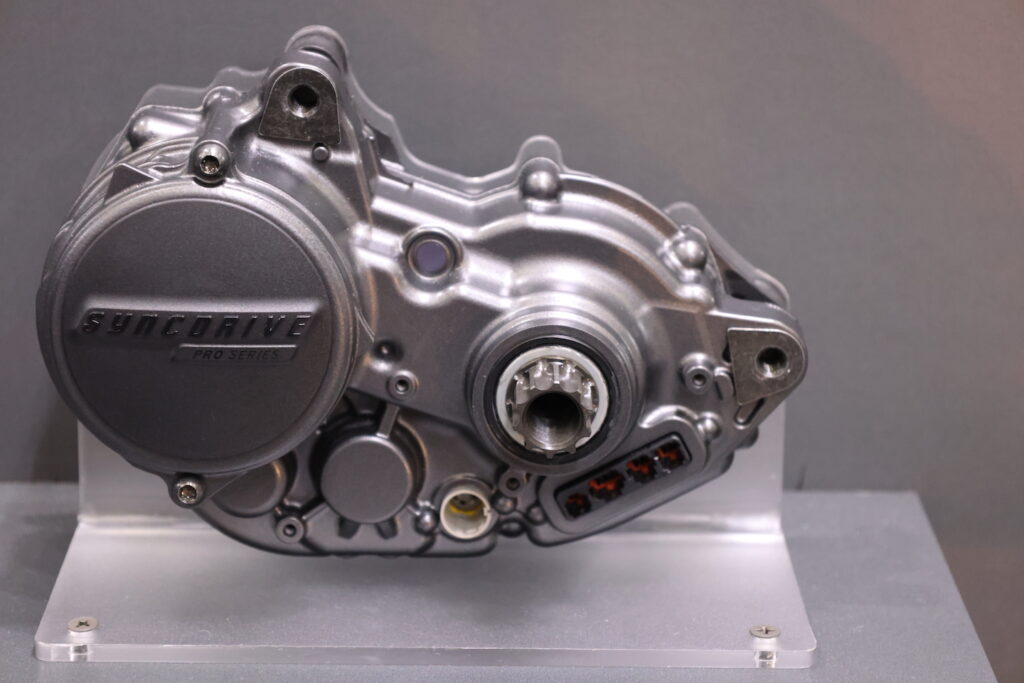
Giant was showing its new custom mid-drive motor developed in conjunction with Yamaha. The Giant-branded SyncDrive Pro 3X motor has a high power-to-weight ratio, making climbing easier while maintaining smooth power output. The new motor features 800 watts and 100Nm of torque, and can achieve maximum torque in 0.24 seconds. The motor will be launched on Giant’s Stance E+ 0 electric mountain bike this spring. The company also unveiled new battery technology that separates each cell, allowing heat to spread out in the battery pack to avoid hot spots.
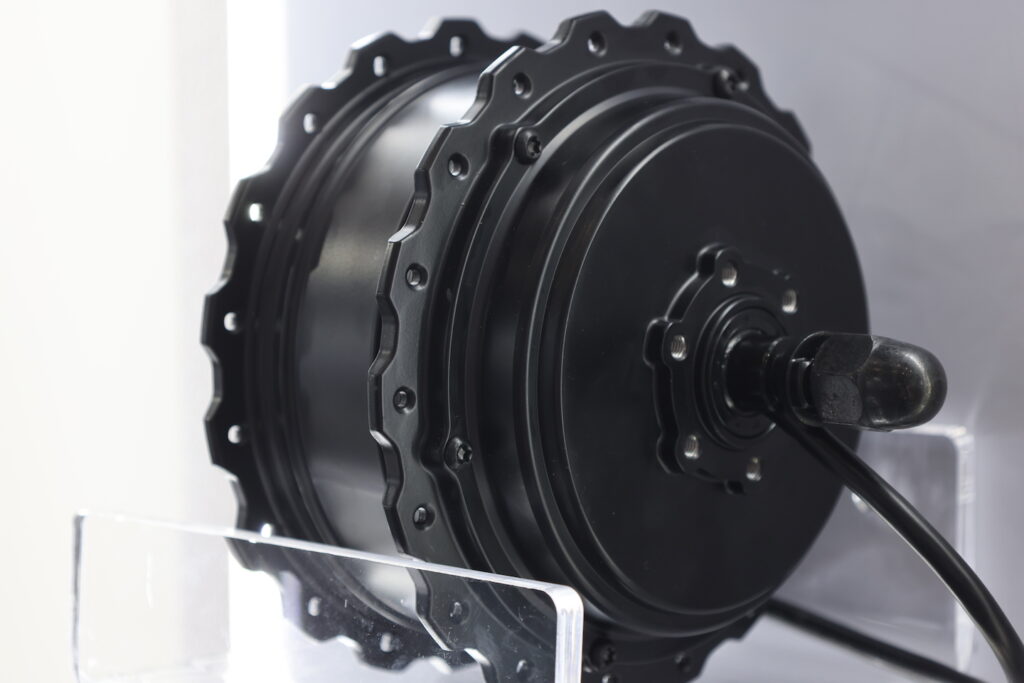
Ananda, a Shanghai-based Chinese manufacturer of rear hub-drive and mid-drive motors, along with controllers and sensors, was displaying their new R900 system, which features a 3-speed rear hub motor that uses centripetal force to make the motor automatically change gears. With factories in China, Vietnam and Hungary, they could become a future major player.
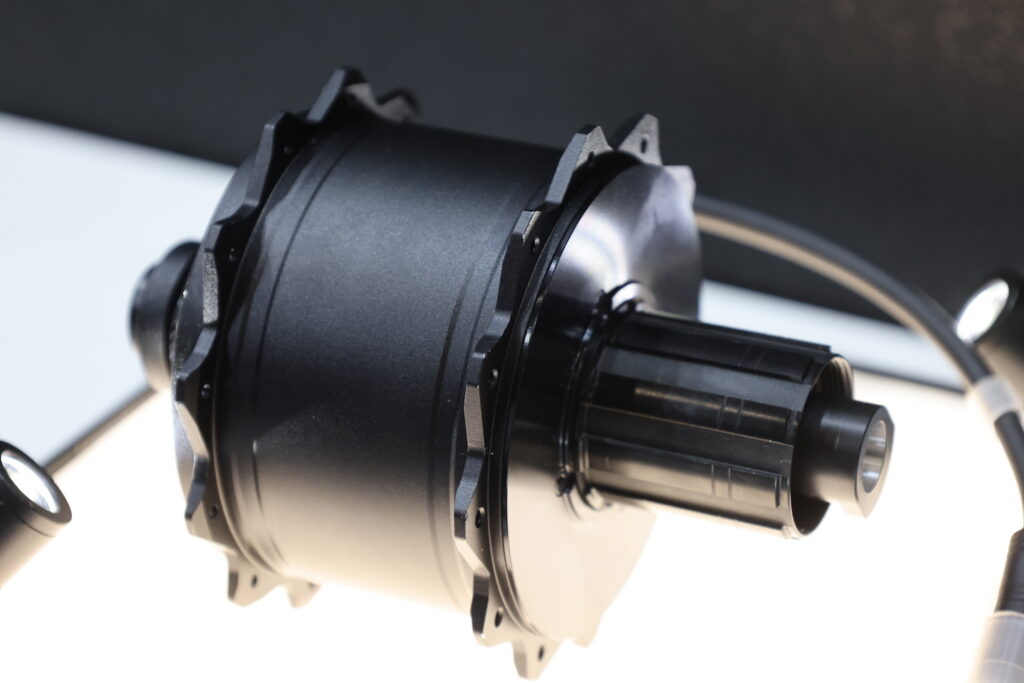
L-TWOO is a component company that makes wireless road groups and now has a new rear-hub motor. The EM85 is a 36-volt motor with 250 watts of power and features 23Nm of torque. At only 1.35kg, it is a competitive offering.
Innovation has always been a focus for companies attending the show, and H2-powered fuel cells are considered one of the most environment-friendly fuel sources. Lite Mobility was displaying one of the world’s first hydrogen-fuelled e-cargo bikes.
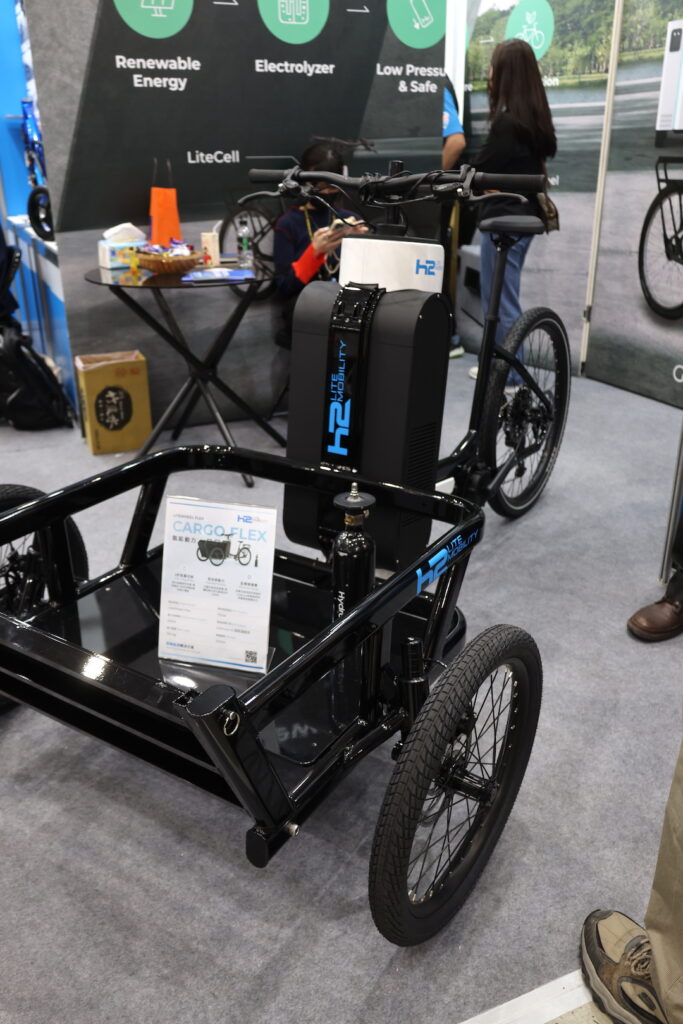
The system uses solar power to generate hydrogen (H2) gas from water that the fuel cell utilizes to power the e-cargo bike. A single charge provides up to 120km of range. The unit is currently priced at a hefty $20,000 US for the e-cargo bike and motor. Clearly the value needs to be seen over the long term, but the innovation shows promise for future development. As the technology develops, the pricing will decrease as well.
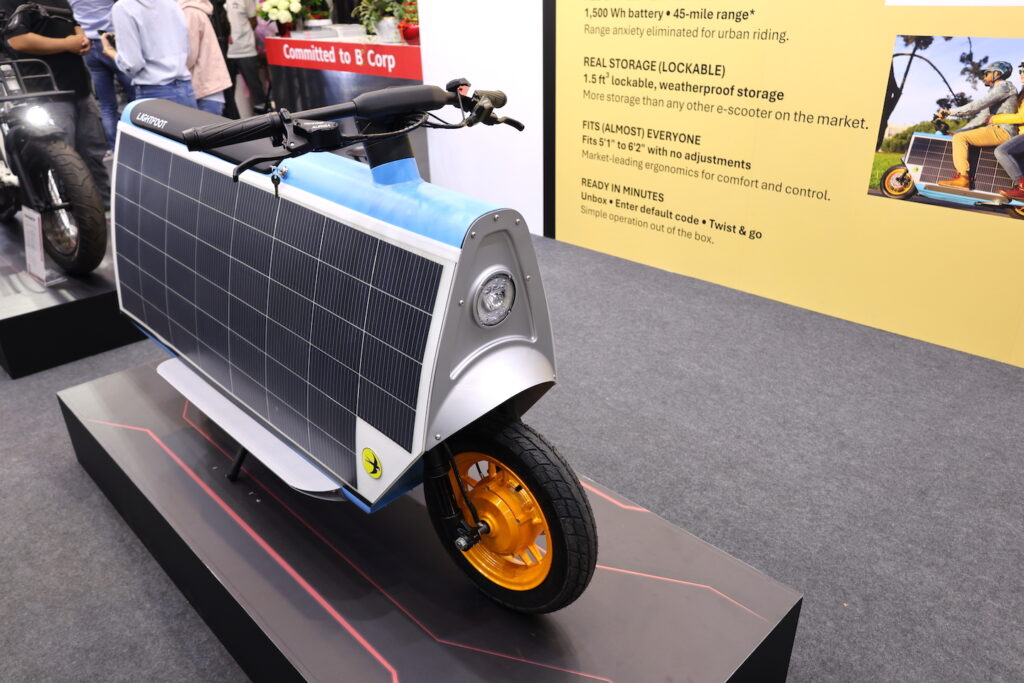
Lightfoot introduced a fully solar-powered scooter with a 1500-watt motor, along with a 1500Wh battery offering up to 45 miles of range. The scooter has a striking look, as the solar panels are installed around both sides of the scooter, making it look like a giant solar panel on wheels. We’re told that the same technology can be applied to an e-bike, but no samples were available.
The flexibility of 3D printing has made it a great tool for prototyping new items, but now the use of the printers has entered the production floor. Saddles are the largest category of items being 3D printed. Most saddle companies had at least two or three 3D-printed saddles in their product line-up. The printed parts of the saddle can create intricate matrixes of different densities of polymers to provide the best comfort zones on the saddle.
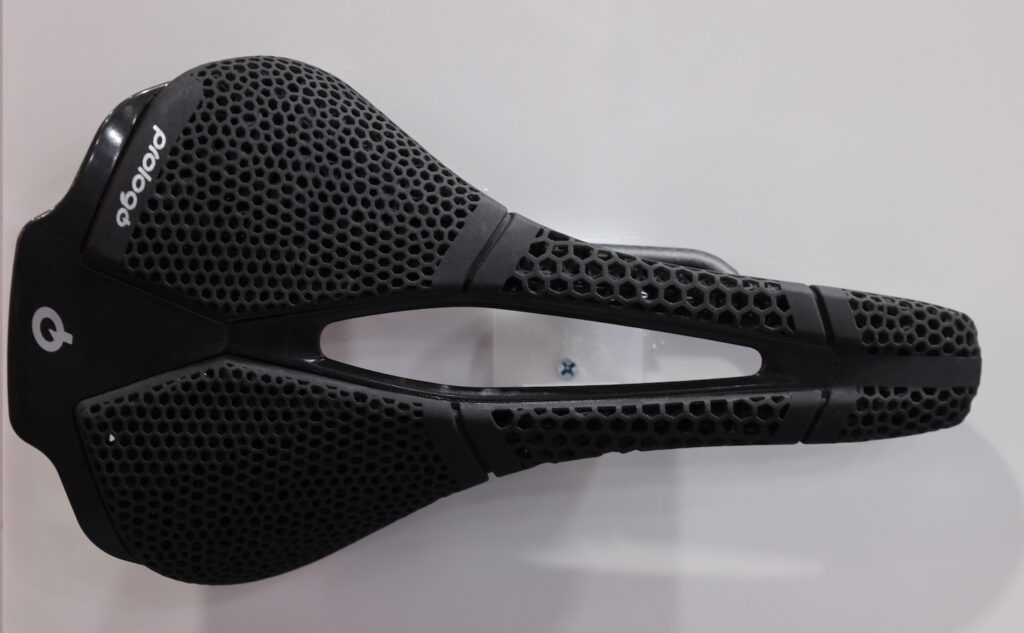
Prologo was displaying their Scratch M5 PAS saddle, which weighs 168g and has different saddle patterns for different compression levels. The only disadvantage is cleaning the saddle, as dirt may get into the open structure. Selle Italia was featuring their SLR 3D Carbon saddle at 137g and Giant also had 3D saddles on display that use their gyroid lattice structure.
One of the unique 3D printed items on display was a 1.7kg 3D printed titanium road frame by Chinese company Laget. The use of 3D printing allows them to print the internal structure inside the tubes and completely redesign how a frame is made. The top tube is a mere 7mm thick but provides all of the strength needed. These unique frames take about a week to print and have a limited production, but all frames they produce are presold for $44,000 Canadian.
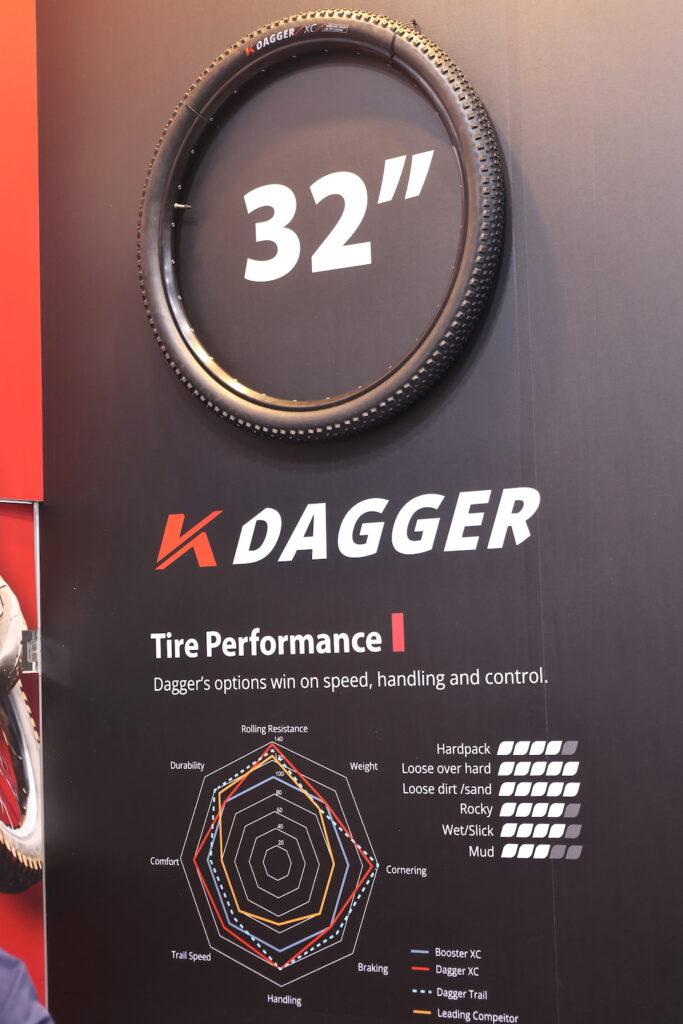
Last year, we reported on the launch of 32” size wheels with limited items being shown. But the concept resonated, and one year later there were 32” wheels everywhere. Tire companies like Maxxis and Kenda have at least one 32” model. Kenda was showing their new Dagger tire in 32” that makes use of recycled fishing nets in the manufacturing process. Schwalbe has a 32” version of their Rick Race tire that showed up in the Manitou booth.
To keep pace, suspension companies have all launched 32-inch front forks now. XFusion showed a 32” gravel fork, the GET 32, as well as the Rezza 32” XC fork available in 100–130mm of travel. Detailed specs were not available yet, as these are pre-release prototypes.
Manitou has a fork coming based on the Mattock and will be released this year, but no name and specs were available at this time. They are also working on models for downhill, cross-country and full suspension bikes.
SR Suntour launched a 32” fork, the Raidon 34, with a thru axle and cast magnesium 34mm lower stations, meant for recreation riders. RST was showing a 32” fork that uses an air spring with 90mm of travel. The legs are made of an alloy casting, and the fork is suitable for 2.4” tires.
In addition, 32-inch wheel complete bikes were also on hand with hardtails showing at the Maxxis and Manitou booths. Manufacturers such as Fritz Jou, and many others, also had models on display.
Gates, the global manufacturer of drive belts, had a big presence at the show to make their case for belts as a replacement for chains on bikes. They have made some headway with e-bikes, as a belt can last up to four times longer than a chain while keeping the drivetrain cleaner as well. Many brands, including Specialized, are offering city e-bikes with belt drives. Other belt players are also getting into the business, and even Michelin was spotted having a belt on a bike.
There were a couple of Canadian brands participating in the show this year. RideWrap, based in Whistler, BC, was on site to promote their protective film process as an added-value item for bike manufacturers.
Kona was also at the show for the first time in several years, displaying two steel frame acoustic bikes in conjunction with Fairly Bike Manufacturing Co.; Ltd., a local Taiwanese company. Kona will be launching three new eMTBs with Bosch motors this year.
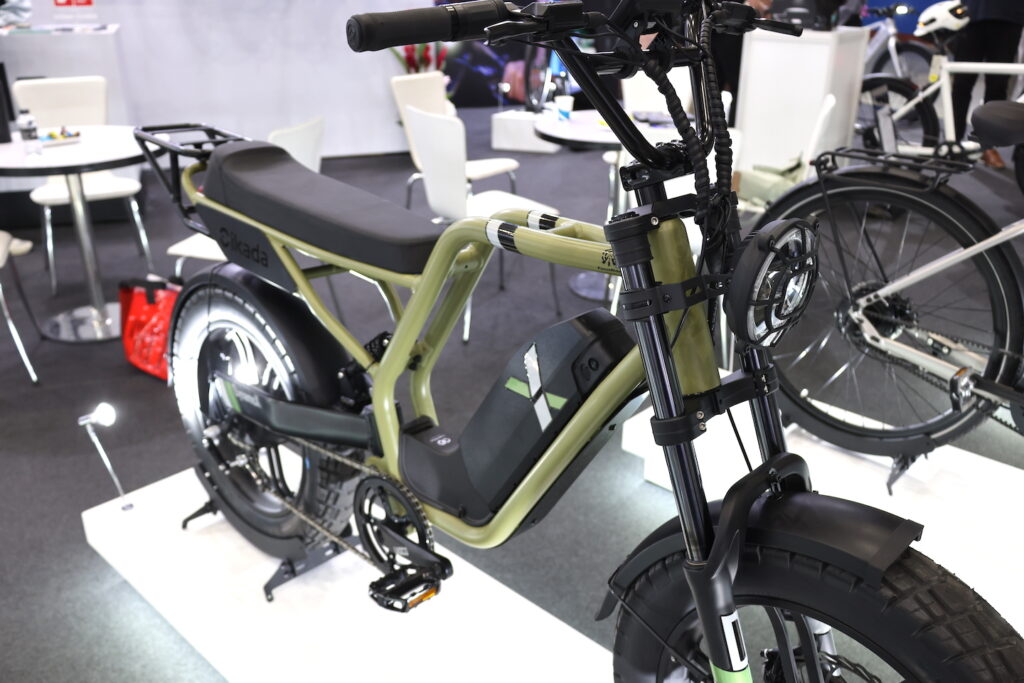
Cikada, with offices in Canada, has a new city bike, the Dynamo X, which is their first fat-tired e-bike designed for commuting. Powered by a 48-volt 750-watt rear hub motor, it features 20” x 4.0” super fat tires. Their other new offering is the Urban E city bike featuring a belt drive that needs less maintenance.
Cikada has also partnered with N+, the company licensed to sell the Ford Bronco, Ford Mustang, Mercedes and VW-branded e-bikes. These are available consumer- direct as well.
Dahon was showing their lightweight K-Feather folding e-bike featuring a 16” frame, a 250W rear hub motor with 32Nm of torque, and a 24-volt battery with up to 50km of range. All this, in a 12-kilo package.
Taipei Cycle will be back March 11–14 in 2027 for four more days of exciting new bikes, components and accessories.