

• Flip Book • eNews • eAdventures • eCities • eCargoIntl • eBikeTypes • eRoad • eGravel • eMTB • eUrban • eCargo • eBikeTests • eAccessories • eBikeShops • eFeatures •

• Flip Book • eNews • eAdventures • eCities • eCargoIntl • eBikeTypes • eRoad • eGravel • eMTB • eUrban • eCargo • eBikeTests • eAccessories • eBikeShops • eFeatures •
May 2, 2026 - In June 2025, Winnipeg’s City council adopted a $4.3 billion Transportation 2050 Master Plan, along with the 2024 Pedestrian and Cycling Strategies (PCS), marking a shift from car-centric planning to focus on building a safer, more accessible and sustainable transportation system.
The $334 million 2024 PCS, renamed the Pedestrian and Cycling Program (PCP), is an update of the award-winning 2015 PCS and aims to transform active transportation by expanding and maintaining safe, well-lit bicycle and sidewalk networks.
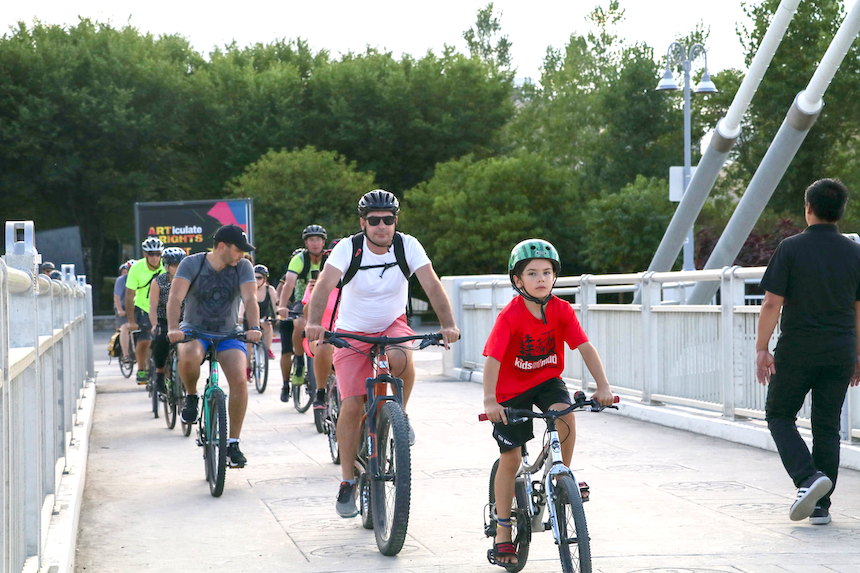
Surveys show that nearly half (46%) of Winnipeggers want to cycle more, including 31% of Winnipeggers who do not ride a bicycle often but want to ride more, and 15% who already ride a bicycle a lot but would also like to ride more.
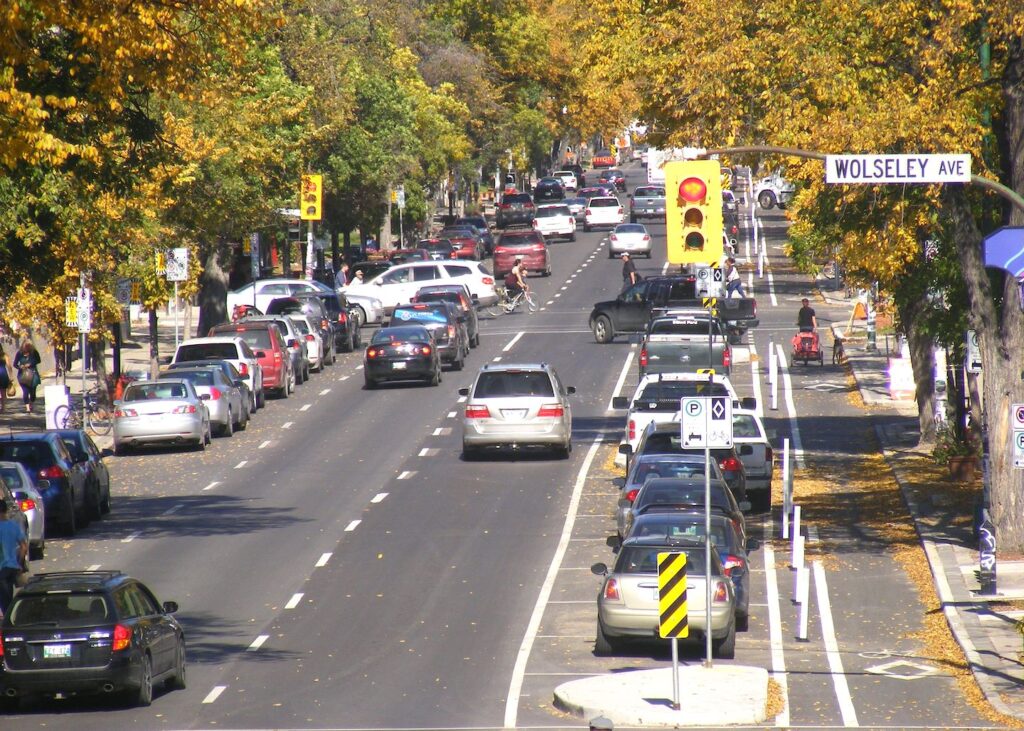
Winnipeg’s current cycling network is 845km, including multi-use pathways (543km), protected bike lanes (31.9km) and painted bike lanes (27.8km), with over 1,500km of cycling infrastructure planned to be built.
The Pedestrian and Cycling Strategies report outlines six strategic directions that are to be enacted through 94 actions and focuses on creating a city-wide network of walking and cycling infrastructure for people of all ages and abilities (AAA).
More than 2% of Winnipeggers get to and from work by bicycle, and the goal by 2030 is to double the walking/cycling modal share from 6.7% to 14%. The plan also presents a mode split target for 2050 where 27% of trips are made by active transportation.
To improve high-quality bicycle parking and end-of- trip facilities, there are several policy initiatives to develop bicycle parking guidelines, to continue the expansion of partnerships with Business Improvement Zones (BIZs) and individual businesses, and to support businesses in existing developments to retrofit existing buildings and thus provide long-term, secure bicycle parking.
In 2022, Council approved the Winnipeg Road Safety Strategic Action Plan which consists of 67 actions to help the city reach its goal of a 20% reduction in fatal and serious injury collisions over the next five years.
In addition, it’s recommended to continue to fund the Bike Education and Skills Training Program, to fund and develop the Winnipeg Repair Education and Cycling Hub (WRENCH), an organization focusing on core area education and outreach on bike repair, and to partner and promote initiatives that encourage active transportation such as Bike to School Month and Commuter Challenge.
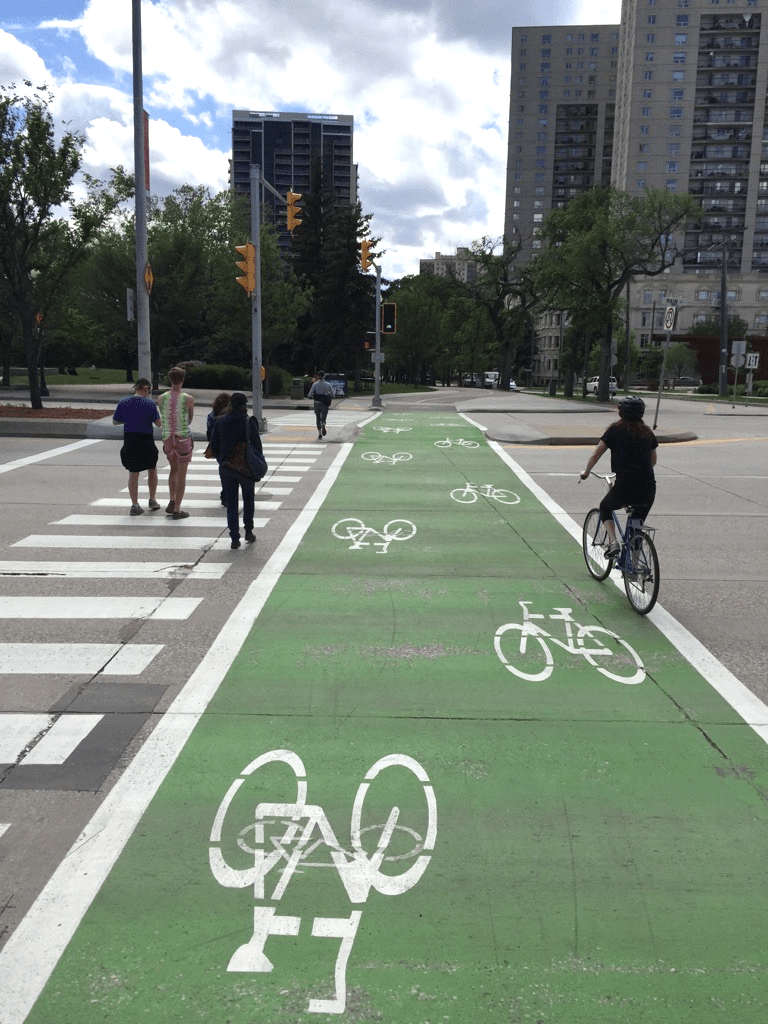
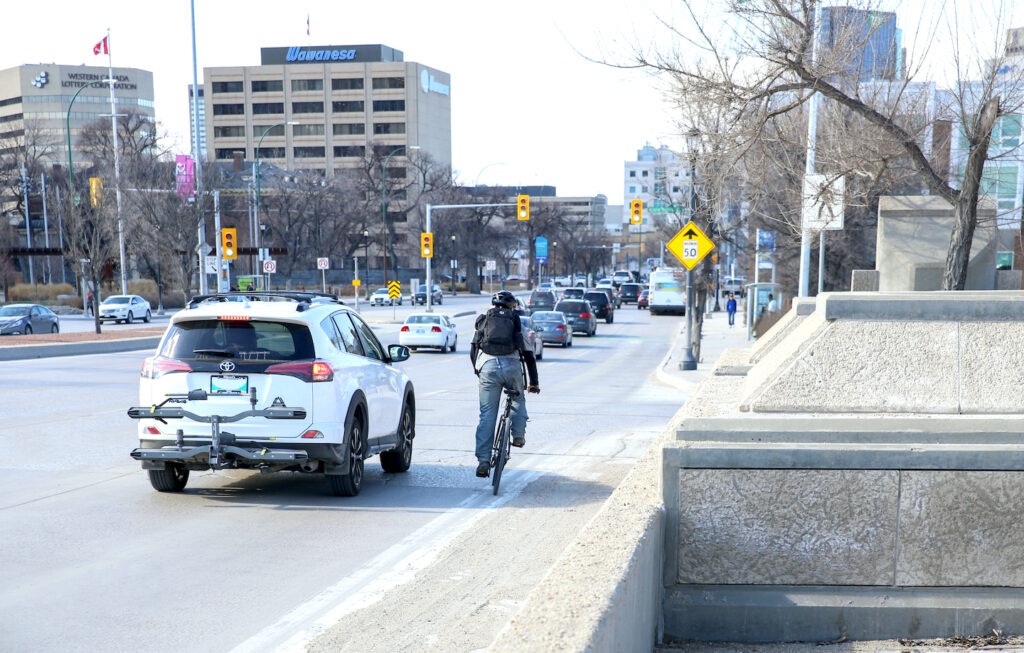
A massive 60% of cyclists in Winnipeg indicated they would cycle more in the winter if they had more separated cycling infrastructure. The PCP also recommends that the city adopt Priority 1 Pedestrian and Cycling snow clearing.
As well, about 35% of Winnipeggers stated they were interested in using an electric bicycle or mobility as a service.
A final testament to Winnipeg’s vibrant cycling community is the massive Bike Valet parking set up for Winnipeg Blue Bomber home games that offers fully secure, monitored bike storage on game and event days with rack space for 900 bicycles, e-bikes and scooters.